
Lawn care
Core aeration
Compacted ground starves the roots no matter how much fertilizer sits on top. Core aeration opens it back up by pulling thousands of small soil plugs out of the lawn.
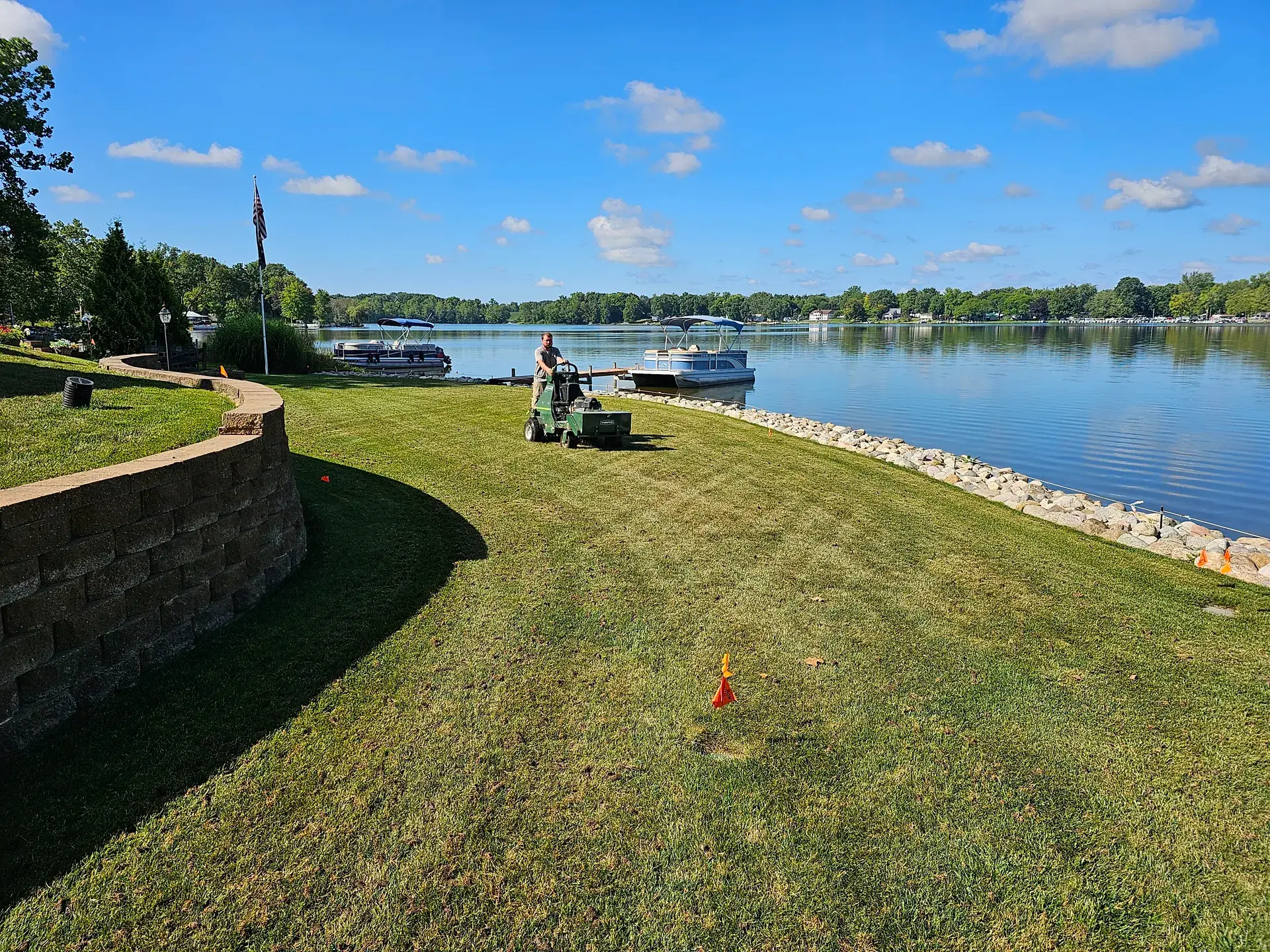
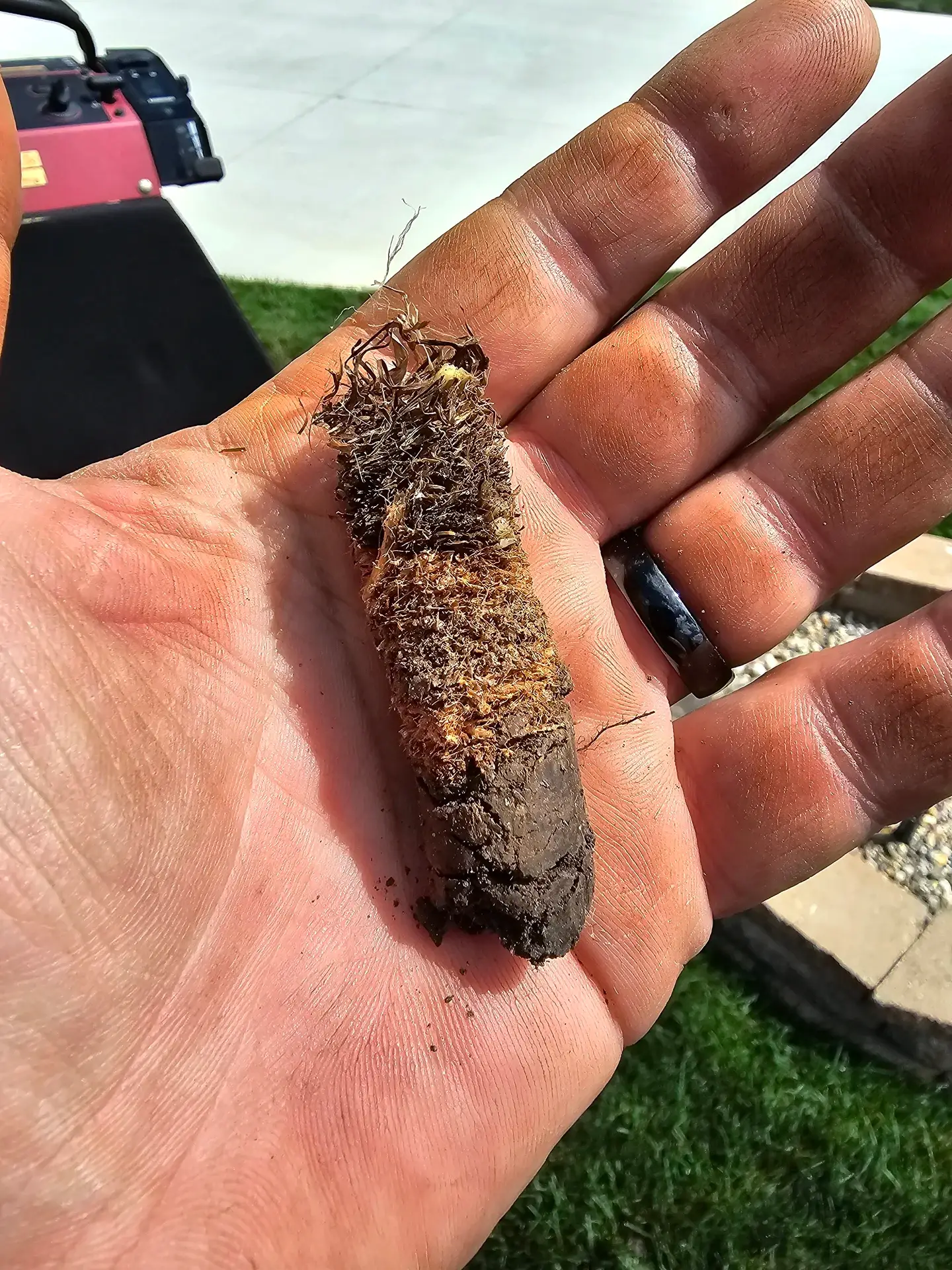
Core aeration pulls finger-sized plugs of soil out of your lawn, opening thousands of channels so water, air, and nutrients reach the roots. We aerate across Kosciusko, Whitley, southwest Allen and Huntington counties, mostly in fall.
The word that matters is core. A machine that only pokes holes shoves soil sideways and packs the walls of every hole it makes, which is the opposite of the point. A true core aerator lifts the plug out and drops it on the surface. That is why an aerated lawn looks like a flock of geese wandered across it, and why the mess is the sign the job got done right.
Why northern Indiana lawns need it
Clay soil packs down, and it doesn't loosen on its own
Most yards in Kosciusko and Whitley counties sit on heavy soil with a real clay content. Clay holds nutrients well, which is the good half. It also compacts under pressure, which is the other half. Every mower pass, every kid on the lawn, every freeze and thaw cycle presses those particles tighter together.
New construction makes it worse. Heavy equipment runs over the lot while the house is going up, topsoil gets stripped and thinly replaced, and sod drops onto ground that was basically compacted on purpose for the foundation. Those lawns are fighting compaction from day one.
Compacted soil grows shallow roots. Shallow roots burn out in the first hot, dry stretch of July, and the fertilizer you paid for sits in the top inch where the plant can't reach it. Opening the soil is what makes the rest of the program actually work.
Timing
Fall is the window, and there's a reason
We aerate from late August into October. Cool-season grass, which is what nearly every lawn around here is, does its strongest growing in that stretch. Kentucky bluegrass, fescue, and ryegrass close the holes fast, push roots into the loosened soil while the ground is still warm, and get weeks of growing time before dormancy.
Spring aeration has its place on lawns that can't wait, but it comes with a trade. Opening the soil in April also opens germination space right when crabgrass seed is waking up, and it breaks the pre-emergent barrier your fertilization program just put down. Fall has neither problem.
What you'll see afterward
For the first two weeks the lawn is covered in plugs. Leave them alone. Rain and mowing break them apart, and the soil and microbes in them go back into the surface where they help chew through thatch.
By week three the lawn looks normal again. The change you actually care about shows up later, across the next spring and summer, as deeper roots let the lawn hold color through July heat and take water without puddling. If we overseeded at the same time, seedlings start filling the thin spots in three to four weeks.
Does your lawn need it
Six things that say yes
- Water puddles or runs off instead of soaking in after a normal rain
- A screwdriver will not push into the soil easily when the ground is moist
- The lawn goes off-color in July faster than your neighbors' does
- Heavy foot traffic lanes have gone thin and hard
- The lawn was sodded or the yard was graded by heavy equipment at build
- It has been more than two or three years since the last aeration
The screwdriver test is the easy one to run yourself. Water the lawn, wait a day, then press a long screwdriver straight down. If it doesn't push in six inches with hand pressure, your soil is tight.
How we do it
How the aeration job actually gets done
On lawns that need it we make multiple passes in different directions, not one lap for the invoice. Hard, high-traffic lanes get extra attention. Slopes and tight side yards get walked, not rushed.
Before we start, we ask you to flag irrigation heads, invisible fence, and shallow wiring, and we work around anything marked. If a lawn is too dry to pull a decent core, we say so and reschedule instead of dragging a machine across it for nothing.
GreenWorks is small and owner-operated. Part of that means telling you when aeration is not the answer. A lawn buried under a thick spongy layer usually needs mechanical dethatching first. A lawn that is thin because it never had enough seed needs overseeding alongside it. Aerating and calling it fixed would be the easier sale and the wrong one.
The fall pair
Aeration and overseeding
Aeration and overseeding are the pair we run in the same fall window. The aerator opens holes down to the soil, then seed goes into freshly opened ground with direct contact where it can germinate. Doing them together is what makes a thin lawn thicken up in one season instead of three.
Service area
Where we do this
We treat lawns in these twelve towns and the country roads between them.
Questions
Core aeration questions
When is the best time to aerate a lawn in northern Indiana?
Late August through October. Cool-season grass is actively growing then, so the turf heals the holes and fills in fast, and fall aeration pairs with overseeding. Spring aeration is possible but opens the soil right when crabgrass seed is germinating.
How often does a lawn need core aeration?
Most lawns here benefit from aeration once a year. Heavy clay or a high-traffic yard clearly does. A sandy, low-traffic lawn on good soil can stretch to every other year. We tell you which one yours is when we look at it.
Should I rake up the plugs afterward?
No. Leave them. The cores break down in two to three weeks of normal rain and mowing. As they go, they return soil and microbes to the surface, which helps chew through thatch. Raking them off throws away half the benefit.
Will aeration damage my sprinkler heads or invisible fence?
Not if they're marked. Flag irrigation heads, invisible fence line, and any shallow cable or lighting wire before we arrive, and we'll work around them. Tell us at scheduling if you have an underground system and aren't sure where it runs.
Can I aerate and seed at the same time?
Yes, and that's the best way to do both. Open holes give seed direct contact with soil instead of leaving it on top where it dries out. Aeration paired with overseeding is the standard fall combination for a thin lawn.
How long until my lawn looks better after aeration?
The plugs disappear in two to three weeks. The real improvement shows up across the following season, as roots grow deeper into the loosened soil and the lawn holds color longer in summer heat. The gain builds across the year.
Get on the fall aeration schedule
Aeration season fills up starting in late August. Send us your address and we'll measure the lawn and get you a date.