
Pest control tips
What actually keeps pests off the house
Exterior pest control around a Kosciusko County house comes down to three pressures: mosquitoes off the water and shaded harborage, blacklegged ticks along the yard-and-brush edge, and ants and spiders working the foundation seam.
Most of what makes a yard buggy is not the middle of the lawn. It is the damp shady edges where mosquitoes rest during the day, the brush line where ticks wait for something warm to walk past, and the seam where siding meets foundation. This page walks through the yearly rhythm of those pressures, what you can handle yourself, and where that stops.
The pest year around a northern Indiana house
Nothing much bites in February. The pest year here starts quietly, then rolls in three waves that overlap more than most homeowners expect.
Mosquitoes
The first wave is mosquitoes, and it starts after the first stretch of warm days following a wet spring. Any water that sat still for a week is a nursery by then: a forgotten pot saucer, a sagging tarp, a clogged gutter, the low spot in the drive that never quite drains. The adults that hatch out do not spend daylight hours in your open lawn. They rest in shaded, humid places, the underside of a deck, the inside of a dense shrub, the ivy on the north side of the garage, the woodpile against the fence. When you get bitten at dusk on your own patio, those are mosquitoes that flew out of your own shrubs to find you.
Ticks
The second wave is ticks, and it is really two. Blacklegged ticks, the ones that carry Lyme in this part of the country, are active in spring as the ground warms, quiet through the hottest weeks, then active again through fall until a hard freeze. They are not out in the middle of the yard. They sit on the tips of grass and low brush along the edge where a mowed yard meets woods, brush, or a neighbor's unmown fence line, and they wait for a dog or a pant leg. Purdue Extension confirms the blacklegged tick is present in most Indiana counties.
The perimeter crowd
The third wave is the perimeter crowd: ants, spiders, the occasional ground beetle, and boxelder bugs later on. It builds through summer and gets serious as nights cool toward fall, when everything with legs starts looking for a warmer, drier place to overwinter and your foundation seam is a promising crack in an otherwise flat wall. Older houses in Pierceton, where nearly half the housing was built before 1939, give them more of those cracks than a newer build in Warsaw does.
Why the lake counties are harder
Kosciusko County is lake country. That is part of the appeal of living here, and it is also why the mosquito load is heavier than it is a county south. Standing water is not just a puddle in the driveway. It is the drainage ditch along the road, the corner of the yard that stays wet a week after every rain, the shaded creek behind the property line, and dozens of small pockets you would not think of as water at all.
The Lilly Center for Lakes and Streams at Grace College in Winona Lake samples sixteen lakes, streams and beaches across the county every summer and publishes what it finds, which is a useful reminder that water is the defining feature of this landscape rather than a footnote to it. The Kosciusko County Health Department also confirmed West Nile virus in a mosquito pool in Warsaw in August 2025, so the risk is not hypothetical.
Killing adult mosquitoes on the wing does very little if the resting harborage stays untreated. The females biting you were not hatched an hour ago, they have been sitting under your deck all afternoon waiting for the temperature to drop. Treating those resting places, the shaded shrub interiors, the fence line, the underside of the deck rail, is what quiets a yard for weeks at a time instead of hours. Our mosquito control page walks through where we apply and why.
A lot of the mosquito problem around a house is homeowner-fixable, and we would rather tell you that than pretend otherwise.
What you can do yourself, and where it stops
What you can handle yourself
Walk the property once a week through the season and dump every container holding water. Saucers under pots, the wheelbarrow, the kids' sandbox toys, the tarp on the boat, the sag in the gutter. Mosquitoes can breed in a bottle cap of water, so this matters more than it sounds. Cut back the shady wet edge of the yard where you can, thin the dense shrubs on the north side, prune the ivy that stays damp all day, and keep the grass short along the fence line where ticks wait.
For the perimeter crowd, seal the obvious gaps. Caulk around hose bibs and dryer vents, close the gap where siding meets foundation, fix torn screens, replace the door sweep on the garage side door. That basic maintenance handles a real share of what would otherwise walk into the house.
Where a licensed applicator picks up
Where it stops is treatment. A homeowner is not licensed to apply the professional products, and the hardware-store spray is a fraction of the concentration and a fraction of the residual. A licensed applicator uses labeled products at label rates on the resting surfaces above, on a schedule matched to how long that residual actually lasts, and keeps records of what went where.
The city of Warsaw runs its own mosquito spraying program on a rotating schedule through the season, plus larval control in standing water and catch basins. That is real work and it helps. But a municipal pass is a low-rate treatment over public ground. It does not reach the shrub line and the shaded back corner on your property, which is where the mosquitoes biting you are coming from.
Kids, pets, and treatment day
Every homeowner with a kid or a dog asks the same question, and it is the right question to ask.
On treatment day the technician arrives, walks the property, and applies to the areas that matter for the service you are on: shrub interiors and shaded harborage for mosquitoes, the tall-grass edge and brush line for ticks, the foundation seam and the few feet of ground around it for the perimeter service. Product stays on the surfaces it is meant for and off the ones it is not.
Deeper reads
The rest of the pest playbook
These go deeper on the pieces homeowners ask about most: when mosquito season really starts around here, what tick prevention looks like for a family with a dog, and how a perimeter application works around an older foundation.
-
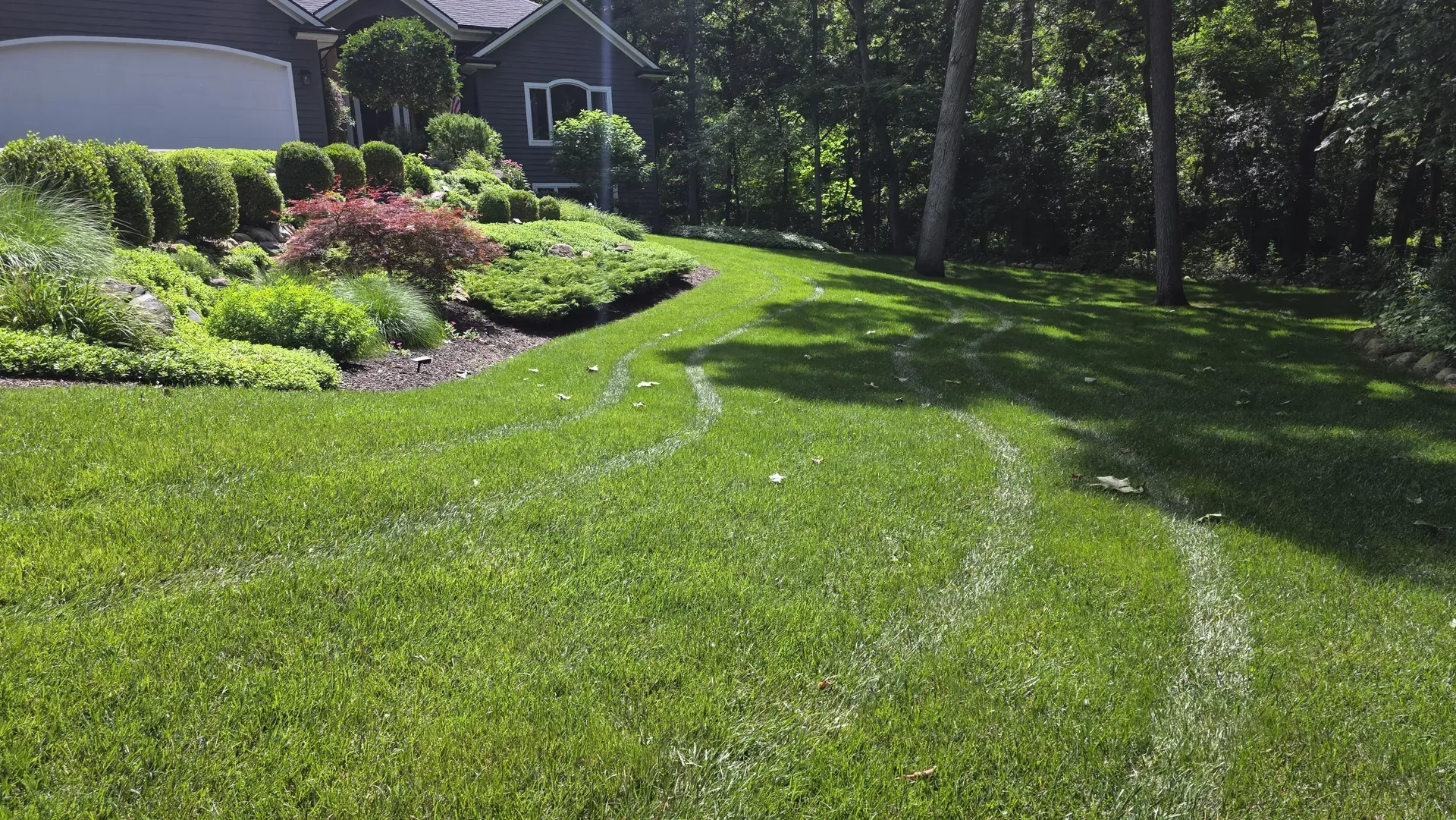
How ticks get into a yard, and what actually keeps them out
Ticks live at the edge where mowed turf meets brush, not on open lawn. Why edge treatment quiets a northern Indiana yard and open sprays don't.
Read the article -
When mosquito treatment starts in northern Indiana
Yard mosquito treatment in northern Indiana starts mid to late May and runs on rotation. What a treatment targets, and why lake country changes the math.
Read the article -
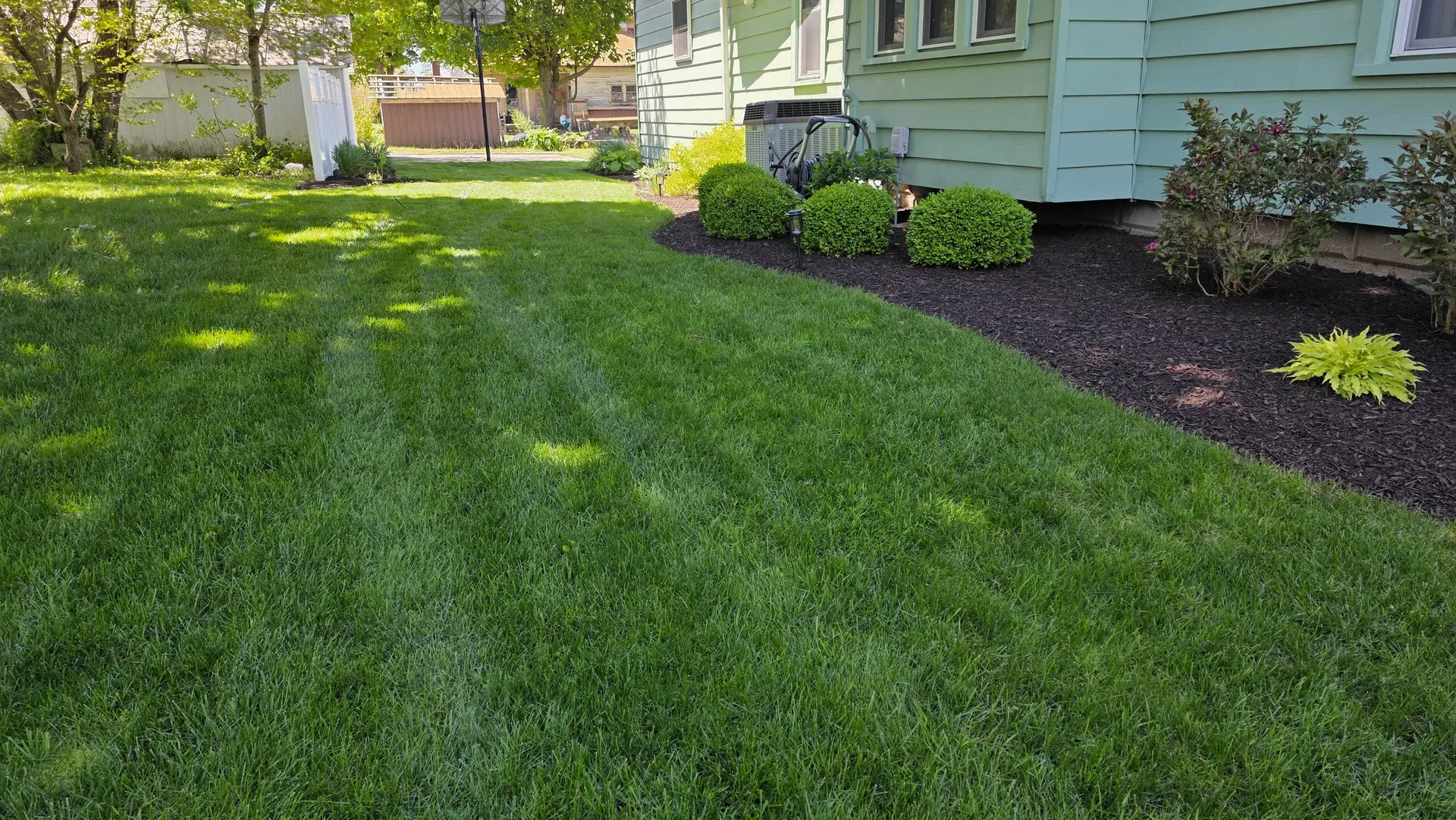
Why ants show up in the kitchen in September
Ant and spider activity climbs in September as northern Indiana nights cool. Where they get in, and why an exterior treated band is the fix.
Read the article
Questions we get asked a lot
When should we start mosquito control for the season?
After the first warm stretch that follows a wet spring, not on a fixed calendar date. In a typical Kosciusko County year that lands somewhere in April or early May. If you host outdoors over Memorial Day weekend, it is worth getting on the schedule well before then.
Does the city of Warsaw's mosquito spraying cover my yard?
No, and it is not meant to. Warsaw runs a public program on a rotating schedule over public ground, plus larval control in standing water. It helps at the neighborhood level. It does not treat the shaded harborage on your own property, which is where most of the mosquitoes biting you at dusk are actually resting.
Is the treatment safe around kids and pets?
Products are applied at label rates by a licensed technician, and once the treated surfaces are dry the yard is fine to use again. Dry time varies by product and by the weather that day, so the technician leaves the exact re-entry guidance for what was applied in a note at the door.
We back up to woods. How worried should we be about ticks?
Worried enough to treat the edge. Blacklegged ticks, the ones associated with Lyme in this part of the country, wait along the seam where mowed yard meets brush or trees rather than out in the open lawn. That edge is the whole target of a tick service.
We have an older house in Pierceton. Do we need perimeter pest control?
Older foundations give ants, spiders and boxelder bugs more ways in, and Pierceton's housing stock skews old. A perimeter service treats the foundation seam and the two or three feet of ground around it, which is where those insects are crossing into the wall. It will not turn a 1930s crawlspace into a sealed vault, but it cuts the traffic substantially.
Here because the grass is the problem rather than the bugs? Lawn care tips covers fertilization timing, aeration, grubs and the rest.
Rather have us look at it
Send a note about the property. We'll tell you what's getting in and what it takes to stop it.