
Huntington County, Indiana
Lawn care and pest control in Roanoke
Roanoke has two lawns in one town, and which one you have depends on which side of town you live on. We treat both, out of the Pierceton shop at the far end of the route. Fertilization, aeration, weed and grub control, and exterior pest work on a regular service day.
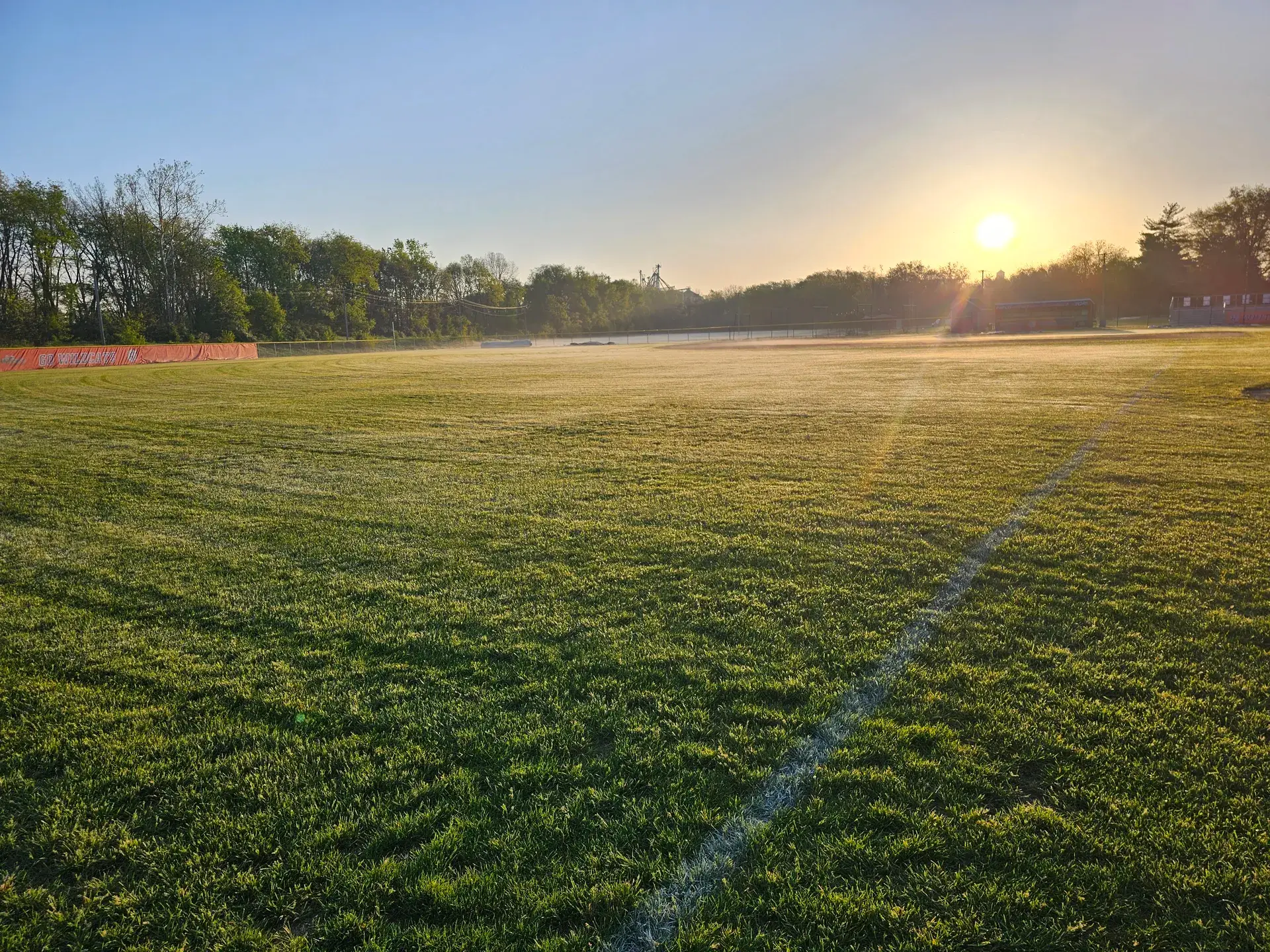
Two lawns in one town
Roanoke sits on the Little River, and the river laid down two very different kinds of ground inside one small town. About 21 percent of Roanoke is on soils the USDA classes as occasionally flooded, Shoals and Eel and Genesee silt loams along the bottom. That is the highest flood-prone share of any town we treat. The rest of the town is on the same Blount and Morley clay till that gives Columbia City and Aboite Township their headaches, heavy ground that will not move water down past eight inches.
Here is the part that surprises people. The river-bottom soils are the best lawn ground anywhere in our whole service area, right up until the river gets into them. Genesee holds 0.226 inches of water per inch of soil, drains well, sits at pH 7.5, carries real organic matter, and has no root-stopping densic layer underneath. A lawn on Genesee, when the water stays where it belongs, is about as forgiving a piece of ground as northern Indiana grows.
The upland half of town is the opposite story. Blount loam runs 23 percent clay at the surface and 42 percent clay eight inches down, and the rate water passes through the soil drops tenfold across that same boundary. Underneath there is a densic layer at about three feet that roots do not enter, and a perched water table sits at about nine inches from November through May. That ground sets up hard, holds water at the surface after a normal rain, and takes fertilizer badly.
So the same fertilizer program on both sides of the same town gives you two different lawns by August. On the bottomland the work is silt recovery after a flood, thin patches from where the water sat, and holding on to the soil you already have. On the upland it is aeration first, second and third, getting air down where the roots are before another round of nitrogen has anywhere useful to go.
- County
- Huntington County
- ZIP codes
- 46783
- From the shop
- Near the far end of our route, southeast of the shop and over into Huntington County.
- Ground
- Two soils split by the river bottom. Heavy clay till on the high ground, and a silt loam on the bottoms that is the best lawn ground we work until the water gets into it.
- Drainage
- The upland half will not take water past eight inches. The bottom half drains well and then floods, a fifth of the town on ground the survey says goes under.
- Housing
- Median home built around 1991, better than half of it since 1990 and about one in seven since 2010. New building on graded clay.
What Roanoke properties need
What Roanoke properties need
Bottomland along the river, clay till up the hill. These are the treatments that come up most, and which ones matter depends on which side you are on.
-
Core Aeration
The upland half of Roanoke sits on Blount till whose subsoil holds 42 percent clay and takes water at a tenth the rate of the topsoil above it. Pulling cores opens the top few inches so water, air and fertilizer can reach the roots. On a lawn that has been fed for years without improving, this is usually the missing piece.
See how it works -
Fertilization & Weed Control
Bottomland Genesee will take a program and reward it. Upland Blount will fight one until the ground is opened up first. We run phosphorus-free unless a soil test says otherwise, because Indiana restricts phosphorus on established lawns, and pre-emergent goes down timed to soil temperature rather than the calendar so crabgrass does not get its start along the warm curb strips.
See how it works -
Overseeding
After the river gets into the bottomland, silt smothers what was there and thin patches show up wherever the water sat. Fresh seed dropped into open aeration holes in fall fills those spots back in, but September rain runs about 2.91 inches regionally, so a new seeding needs water put on it to establish.
See how it works -
Grub Control
Grubs eat roots straight through August on both sides of town. On bottomland Genesee they take advantage of ground that already grows good turf. On upland Blount they finish off a lawn that was thin to begin with. A preventative application in early summer stops them before the damage is done.
See how it works -
Perimeter Pest Control
About 16 percent of Roanoke's houses were built in 1939 or earlier, and older foundations give ants, spiders and boxelder bugs a lot of ways in around the sill and the vents. A treated band around the outside of the house is what keeps them out of the kitchen and the basement.
See how it works -
Mosquito Control
With more than a fifth of the town on flood-prone bottomland along the Little River, standing water shows up in more places in Roanoke than most neighbors deal with. Mosquitoes rest in the shade along fences, under decks and in shrub lines, and that is where a treatment on your own property does its work.
See how it works
A Main Street worth keeping up
Roanoke is unusual for its size. Pete and Alice Eshelman began buying derelict downtown buildings in the early nineties, opened Joseph Decuis around the turn of the century serving wagyu from their own farm outside town, and encouraged other small businesses onto the same block. The street is still being written up in national travel press.
The practical read for a lawn company is simple. A town that has watched a family invest in how the street looks for a generation has commercial grounds standards well above what the population would predict. Entrances read fast. A thin, weed-run curb strip in front of a downtown building says something about the tenant that no sign can undo, and the people who live and eat here have been watching somebody care about that for thirty years.
We run the same fertilization, weed, grub and pest programs on commercial grounds that we run on houses, sized to the property and scheduled around your hours. Entrances, medians, retention areas, the parking-lot strips that most crews skip. In a town where half the ground is Blount till and half is river-bottom silt, a single blanket program almost never fits, and different pieces of the same property often need different treatments. We walk it first, then quote it.
Roanoke lawn questions we get
How do I know which soil I'm on, the flood side or the clay side?
Look at where the water goes in a heavy rain. If your ground drains fine and the yard only floods every few years when the Little River gets high, you are on Eel or Genesee bottomland and your lawn ground is genuinely good. If your yard sets up hard, puddles in a normal rain, and takes forever to green up in the spring, you are on Blount till and you need cores before you need anything else. We can tell in one walk.
The river got into my yard. What do I do?
Give the turf a week to dry, rake and remove the silt that landed on it, and look at what came back. Where the crown of the grass got buried, it will not push through, and that ground needs seed and starter more than another feeding. Bottomland Genesee is forgiving, but only if you get the silt off before it seals the surface.
Do you cover Roanoke out of the Pierceton shop?
Yes. Roanoke is the far end of the route, over in Huntington County, and we treat it on a regular service day rather than a call-out. Send the address and we will fold it into the next pass through town.
Do you use phosphorus on lawns here?
Not by default. Indiana restricts phosphorus on established lawns, and we run phosphorus-free unless a soil test says the ground is actually short. On bottomland that already carries real organic matter, the soil is usually fine. On upland Blount it is worth testing before deciding.
When should crabgrass pre-emergent go down?
Timed to soil temperature rather than the calendar. The date shifts every year with the weather, and heavier ground warms slower than sandy ground, so a Blount lawn on the upland side of Roanoke usually gets a few extra days over the sandier towns west of here for the same product.
Do you mow or do landscaping?
Neither. GreenWorks is a lawn-health and exterior pest control company. We feed the soil, control weeds and insects, treat around the outside of the house, and aerate and overseed. We do not mow or landscape, but if you need a company to cut the grass, ask us and we will point you to one we trust.
Reviews
What Roanoke neighbors say
“I love the color yellow, but not in my lawn. After just a couple seasons with Greenworks Lawn Solutions, our yard is dandelion free!!! We also appreciate the helpful tips Steven gave us about lawn care. ( we were cutting our grass TOO SHORT)”
Nearby
Nearby towns we also treat
Southwest Fort Wayne, Columbia City and Larwill are the rest of the eastern run, and most weeks we are in one of them.
Get a price on your Roanoke lawn
Send the address and what the yard is doing. We will walk it, tell you whether you are on the bottomland or the till, and put a program and a price in front of you.