
Lawn care
Mechanical dethatching
When dead grass and old clippings build up at the base of the turf, water stops soaking in and roots start growing into that layer instead of the ground. Dethatching pulls it back out.

Our mechanical dethatching runs a dethatch rake on a commercial zero-turn across the lawn in a criss-cross pattern, pulling up dead grass and excess clippings and leaving the turf lighter of debris. We do it on lawns across Kosciusko, Whitley, southwest Allen and Huntington counties.
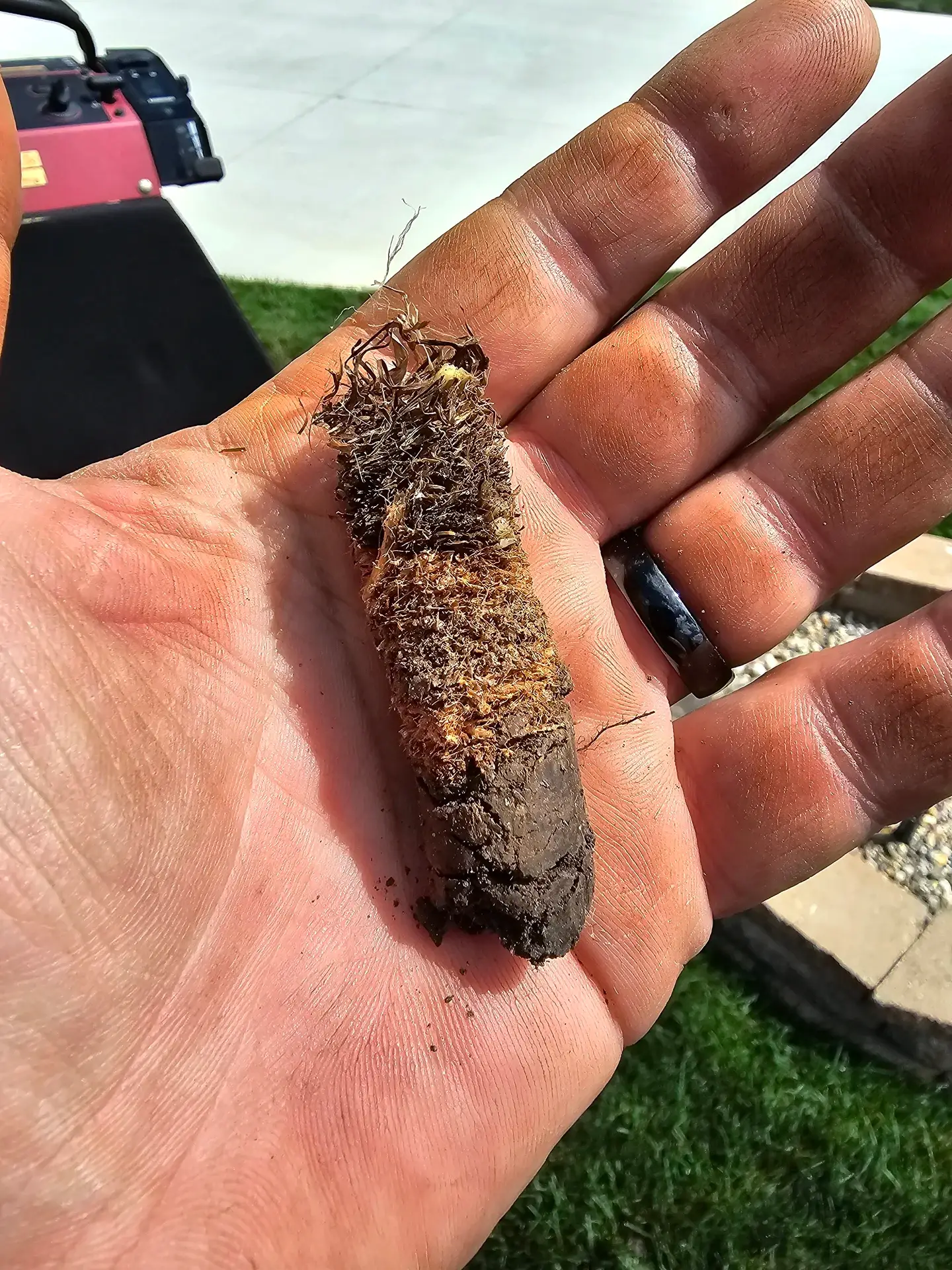
Thatch is the brown, spongy layer sitting between the green grass and the soil. Stems, crowns, and roots along with old clippings that never broke down. Up to about half an inch it does a job worth having: insulates the crowns, holds moisture, and cushions traffic.
Past that, it works against the lawn. Water hits it and runs off or pools on top. Fertilizer and control products get bound up before they reach the soil. Roots grow sideways into the thatch instead of down into the ground, so the lawn dries out fast and scalps every time the mower rolls over a rise.
We usually run this service after the first growing season, to clear the excess clippings out before summer heat turns them into a lawn-health problem. On lawns in rough shape we dethatch, then core aerate and overseed behind it, so the seed lands in open soil and germinates properly.
Check it yourself
Cut a wedge and look at the side
Two minutes with a spade settles the question before anyone quotes you anything.
Push a spade into the lawn and lift out a wedge four or five inches deep. Turn it on its side. You will see green grass on top, a brown fibrous layer in the middle, then soil. Measure the brown layer.
Under half an inch, leave it. It is doing its job. Half an inch to an inch is worth keeping an eye on and usually responds to aeration. Over an inch means the lawn needs dethatching, and by then you have already noticed the symptoms: the turf feels springy underfoot, footprints stay pressed in, and the lawn browns out days before the neighbors' does in a dry stretch.
Why thatch builds up in the first place
Heavy nitrogen pushes top growth faster than the soil microbes can break the old material down. Compacted soil suppresses those same microbes, since they need air to work. Constant light watering keeps roots up in the thatch layer instead of driving them down into the ground. Kentucky bluegrass produces more thatch than tall fescue does, so a bluegrass lawn on tight clay is the classic candidate.
Fixing the cause is what keeps it from coming back. Usually that is core aeration every fall plus a fertilization program built on steady season-long release instead of heavy spikes of nitrogen.
Straight answer
Dethatching and aeration work together
The two get confused all the time, and on a lawn in rough shape they belong together. The rake breaks the thatch layer up and lifts it off the surface. The aerator pulls plugs of soil out of the ground and brings up microbes that help break down whatever the rake leaves behind. One takes debris away, the other feeds what stays.
Lawns that are mowed wrong, overwatered, or just grown too thick usually need both. For a lawn in the half-inch to one-inch range, aeration on its own often does the job. Over about an inch of thatch, the rake goes in ahead of the aerator.
We measure before we recommend. Nobody here has a quota to hit, so if aeration alone is what your lawn actually needs, aeration is what we will tell you.
The job
What the day looks like, and the two weeks after
We run a dethatch rake behind a commercial zero-turn and cross the lawn in a criss-cross pattern to pull up as much dead grass and excess clippings as we can. Mow the lawn short beforehand, and mark irrigation heads, invisible fence, and shallow wiring so we can work around them.
The rake pulls a lot of dead material to the surface, and it gets cleaned up as part of the job. Underneath, the turf looks thin and beaten for a couple of weeks before it fills back in.
That is the moment to seed. The soil is exposed and receptive, so we usually pair dethatching with core aeration and overseeding and let the new grass establish into the cleared ground. Keep the top inch damp for two to three weeks and the lawn closes back up thicker than it was.
Service area
Where we do this
We treat lawns in these twelve towns and the country roads between them.
Questions
Lawn dethatching questions
What is thatch, exactly?
Thatch is the layer of dead and living stems, crowns, and roots that builds up between the green grass and the soil. A thin layer is normal and useful. Once it gets past about half an inch it starts holding water and blocking roots.
Do grass clippings cause thatch?
No. Clippings are mostly water and break down in a few days. Thatch comes from the tougher, slower-decaying parts of the plant, stems, crowns, and roots. Bagging clippings will not prevent it, and mulching them back does not cause it.
How do I know if my lawn has too much thatch?
Cut a wedge out of the turf with a spade and look at the side. If the brown spongy layer between grass and soil is thicker than half an inch, you have a problem. The lawn will also feel bouncy underfoot, and footprints will stay pressed in.
Is dethatching the same thing as aeration?
No, but they work together. Dethatching drags a rake across the surface to lift dead grass and excess clippings off the top. Aeration pulls plugs of soil out of the ground and brings up microbes that help break down what's left. Lawns in rough shape usually need both.
When should a lawn get dethatched?
Usually after the first growing season, once excess clippings have built up at the base of the turf. Clearing them out before the summer months keeps that layer from causing lawn-health problems when the heat sets in.
What does the lawn look like after dethatching?
Lighter. The rake pulls a lot of dead grass and clippings up off the surface, we clean the debris up, and the turf underneath looks thin and beaten for two to three weeks. That is why we seed into it on lawns that need it, and why we only do it when it is warranted.
Find out what your lawn actually needs
We measure the thatch, check the soil under it, and tell you straight whether dethatching is worth the trouble.