
Lawn care
Fertilization and weed control
Feed the turf through the whole growing season and stop weeds before they claim the ground. Three program levels, every one built on season-long fertilizer, every one put down by our own technicians.
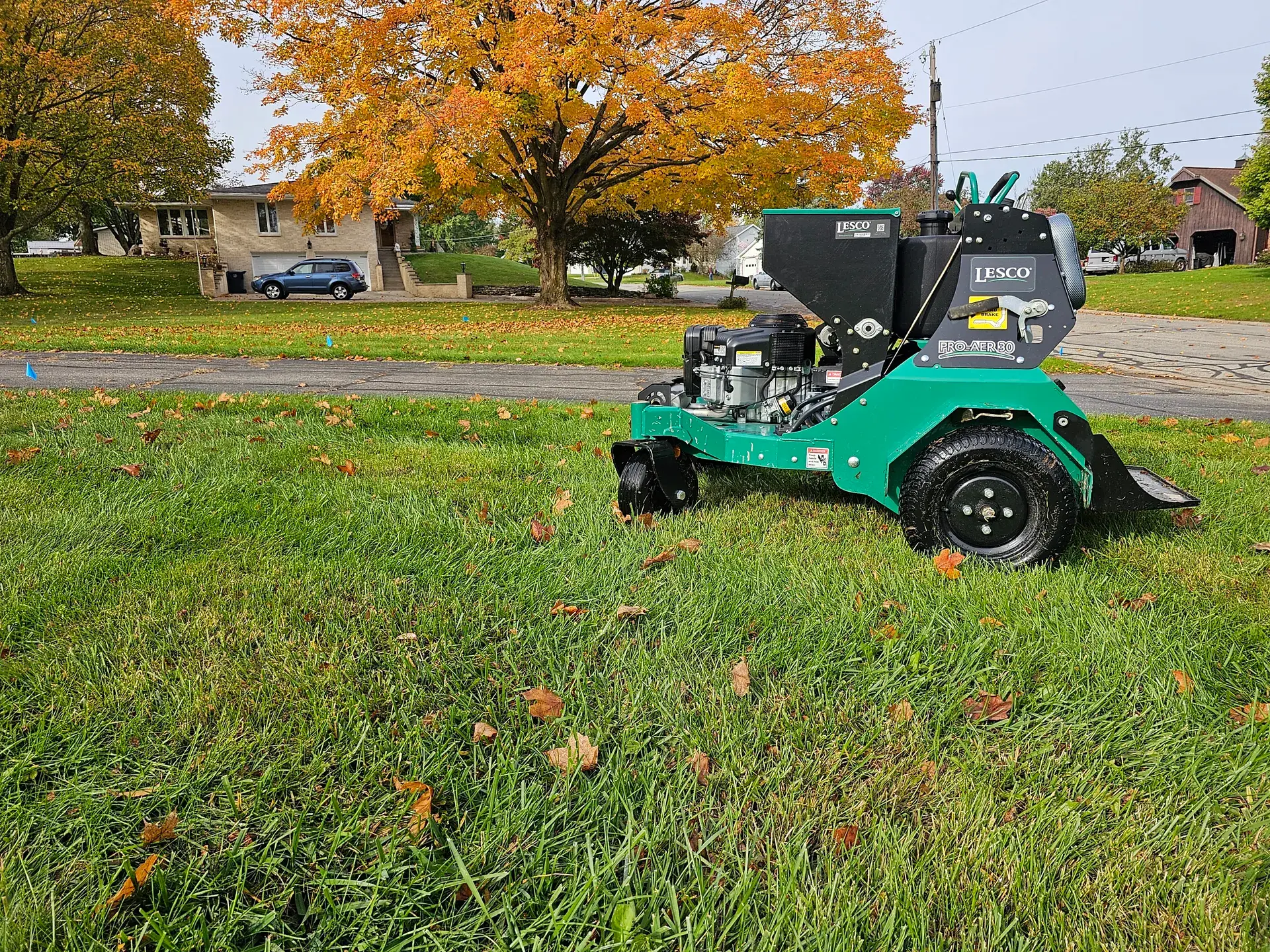
Our fertilization and weed control programs feed your lawn all growing season while shutting down crabgrass, grassy weeds, and broadleaf weeds. Three program levels, available across Kosciusko, Whitley, and southwest Allen counties.
Fertilizer and weed control belong together because they work the same problem from two ends. A fed, dense lawn crowds weeds out on its own. A thin, hungry lawn hands them bare soil to land in. Treat one without the other and you get a yard that is green and full of clover at the same time.
Every program starts with a look at the lawn. We measure the turf, check what is already growing in it, and note the shade, the slope, and how the ground feels under a boot. From there we know which level fits, and whether the lawn wants core aeration or overseeding before fertilizer will do much for it.
How the fertilizer works
Lawn fertilization, season-long feeding, not one big spring dump
All three programs run on season-long fertilizer that releases nutrients steadily across the growing season instead of dumping them all at once. Your lawn gets a steady supply between visits rather than a surge and a slump.
That matters here more than it would in a milder climate. Cool-season grass in northern Indiana runs hard through April, May, and June, then hits the wall in July and August. A fast-release feeding in June pushes soft top growth right before disease pressure peaks. Steady release keeps the plant fed without forcing that flush.
Then the season turns. September into early November is when cool-season turf does its real work, thickening up and pushing root mass while nobody is watching. The Advanced Program adds fall nitrogen boosters aimed straight at that window. What the plant stores in October is what greens the lawn back up and carries it into late spring, before the summer heat asks the roots to work again.
Weed timing follows the same calendar. Pre-emergent has to be down before soil temperature holds near 55 degrees, usually late March into April here, to catch crabgrass at germination. Broadleaf weeds like dandelion and clover get treated in spring when the plants are growing, then again in fall when they are pulling everything back into the roots and take the herbicide down with them.
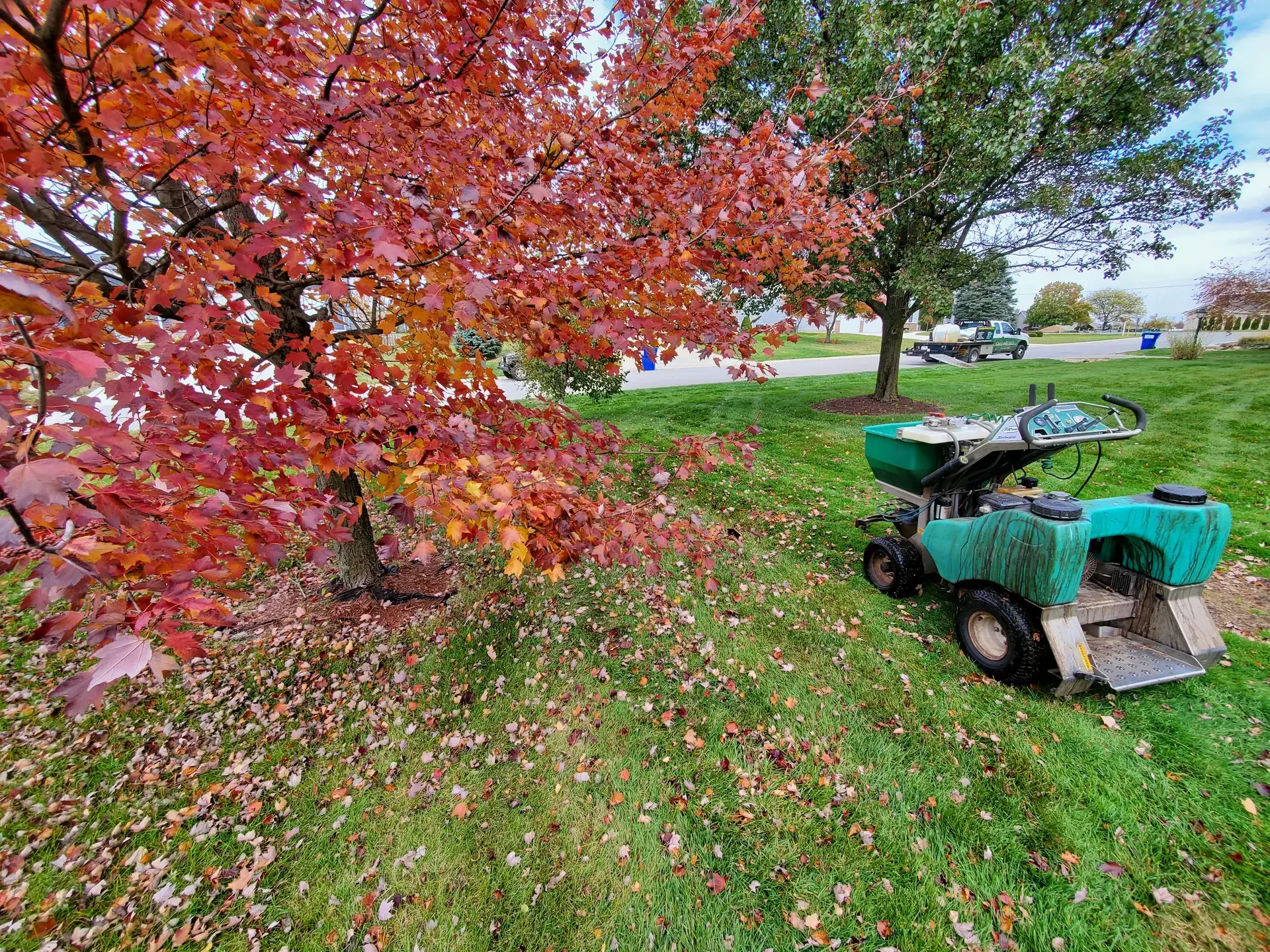
Timing
Weed control
Weed control runs on the same rhythm as the fertilizer. Pre-emergent goes down in early spring to catch crabgrass at germination. Broadleaf weeds get treated in spring while they're actively growing, then again in fall when they're pulling everything back into the roots and take the herbicide down with them.
Two well-timed rounds beat five reactive ones. That's what keeps a lawn from losing ground season over season.
The programs
Standard, Advanced, and Preferred
Each level includes everything on the list under it. Price depends on how much turf you have, so we measure the property before we quote instead of publishing a number here.
-
Standard Program
For non-irrigated lawns. Keeps weeds down to a minimum and feeds the lawn enough to keep it looking nice, at a budget-friendly price.
Includes
- Season-long fertilization
- Crabgrass prevention
- Grassy weed control
- Spring broadleaf weed control
- Fall broadleaf weed control
Recommended add-ons
- Fall fertility boosters
- Core aeration
- Overseeding
Best for: Non-irrigated yards where the goal is a nice-looking lawn without every add-on, and weeds held to a minimum.
-
Advanced Program
For irrigated properties. Keeps the lawn healthy and dark green, weed and pest free, with eco-friendly practices that use fewer emissions and less plastic.
Includes
- Higher-rate season-long fertilization
- Crabgrass prevention
- Grassy weed control
- Spring broadleaf weed control
- Fall broadleaf weed control
- Preventative grub control
- Fall nitrogen boosters
Recommended add-ons
Best for: Irrigated lawns that need to stay dark green, weed and pest free, with lower-emissions and lower-plastic applications.
-
Preferred Program
A licensed technician on your property every five weeks. Zero tolerance for weeds or pests, season-long diagnostics on lawn health, and the greenest lawn on the block.
Includes
- Seven scheduled applications
- Fertilizer with every application
- Weed control with every application
- Two rounds of pre-emergent crabgrass and grassy weed control
- Enhanced weed control throughout the season
- Preventative grub control
- Surface-feeding insect control
- Consistent professional monitoring
Recommended add-ons
Best for: Owners who want a licensed tech on the property every five weeks with zero tolerance for weeds or pests, watching lawn health all season.
Side by side
What changes as you move up a level
| What's included | Standard Program | Advanced Program | Preferred Program |
|---|---|---|---|
| Season-long fertilization | Included | At higher rates | Fertilizer with every application |
| Fall nitrogen boosters | Not included | Included | Not included |
| Crabgrass prevention | Included | Included | Two rounds of pre-emergent |
| Grassy weed control | Included | Included | Two rounds of pre-emergent |
| Spring broadleaf weed control | Included | Included | Weed control every application |
| Fall broadleaf weed control | Included | Included | Weed control every application |
| Enhanced weed control throughout the season | Not included | Not included | Included |
| Preventative grub control | Not included | Included | Included |
| Surface-feeding insect control | Not included | Not included | Included |
| Seven scheduled applications | Not included | Not included | Included |
| Consistent professional monitoring | Not included | Not included | Included |
Choosing
Which program fits your lawn
Most of this comes down to what the lawn is already doing and how much you want to think about it.
Choose Standard if the lawn isn't irrigated
Non-irrigated yards where the goal is a nice-looking lawn without every add-on. Standard keeps weed pressure down to a minimum and feeds enough to hold color and thickness, at a budget-friendly price. Most already-maintained yards start here. When you want to push a Standard lawn further, fall fertility boosters, core aeration and overseeding are the add-ons we usually recommend.
Choose Advanced if the lawn is irrigated
Irrigated properties that need to stay healthy and dark green, weed and pest free, all season. Advanced is our eco-friendly track, delivered with fewer emissions and less plastic, without giving up results. A fungicide program plus core aeration and overseeding are the two add-ons that pair best with it.
Choose Preferred if you want the greenest lawn on the block
A licensed technician on your property every five weeks, zero tolerance for weeds or pests, and season-long diagnostics on the health of the lawn. Pick this level when appearance really matters and you want a professional watching for problems before you have to notice them. A fungicide program plus core aeration and overseeding round it out.
And if the lawn is genuinely in rough shape
No fertilizer program repairs bare soil, hard-packed ground, or a thatch layer you can sink a finger into. Those lawns want aeration, overseeding, or dethatching first, then a program to hold the gains. We'll tell you that at the quote instead of selling you a year of applications that cannot work.
On the day
What happens when we treat your lawn
A technician walks the whole property, not just the front. Granular fertilizer goes down with a calibrated spreader so the rate stays even and the edges don't get double-fed. Weed control goes on where the weeds actually are: spot-treated on a light lawn, blanket-applied where pressure is heavy.
Before leaving, the tech notes what went down and anything worth flagging. A dry corner. An area going thin under a maple. Early signs of lawn disease, or damage that looks like grubs. You get a note at the door with the date, the products used, and the re-entry time.
After that: stay off the grass until it dries, water when you can, and mow at three inches or higher. Those three do more for a fed lawn than any upgrade we could sell you.
Service area
Where we do this
We treat lawns in these twelve towns and the country roads between them.
Questions
Fertilization and weed control questions we get
How many fertilizer applications does a lawn need in Indiana?
Cool-season lawns here do well on four to seven feedings between March and November. The Preferred Program runs seven scheduled visits. Standard and Advanced use season-long fertilizer that keeps releasing between visits, so the lawn gets the same nutrition across fewer trips.
When does crabgrass pre-emergent have to go down?
Before soil temperatures hold near 55 degrees. In northern Indiana that usually lands between late March and mid April. Pre-emergent catches crabgrass at germination, so once the plants are up and visible the barrier is no longer the fix, and each plant has to be treated directly.
How long after a treatment can my kids and pets go on the lawn?
Stay off until the treatment has dried, generally a couple of hours on a normal day. Our tech leaves a note at the door with the date, what went down, and the re-entry time for that specific product.
Why do weeds keep showing up after a weed control application?
Broadleaf weeds die over one to three weeks, not overnight, and new seed keeps blowing in from neighboring yards all season. That's the reason our programs repeat weed control instead of doing one spring spray. Thick turf is the real long-term answer, because weeds need bare ground to start.
Do I still need to water and mow if you are fertilizing?
Yes, and both matter more than people expect. Give the lawn about an inch of water a week including rain, and mow at three to three and a half inches. Cutting short is the fastest way to invite crabgrass into a fed lawn.
Can I switch programs partway through the season?
Yes. Plenty of customers start on Standard and move up to Advanced or Preferred once they see how the lawn is responding, or once grubs or heavy weed pressure show up. Call (574) 549-3650 and we'll adjust the remaining visits.
Get your lawn on a program this season
Send us your address and what the lawn is doing. We'll measure it, recommend a level, and get a price back to you.