
Lawn care
Grub prevention and control
Grubs work out of sight. They chew roots off under the surface through August, and then a lawn that looked healthy last week peels back like carpet. Timing the treatment before the hatch is what stops it.

Grub control stops white grubs, the larvae of Japanese beetles and masked chafers, before they chew roots off under the surface. We treat lawns across Kosciusko, Whitley, southwest Allen and Huntington counties in late spring, ahead of the hatch.
A white grub is a fat, C-shaped larva about an inch long, curled up in the top two inches of soil. It does not eat blades. It eats roots. That is why the first sign looks like drought, and why watering never brings the lawn back. By the time the grass browns, the plants are already unhooked from the ground.
Timing matters more than the product. Get an application down before the eggs hatch and the generation never gets started. Wait until damage shows and you are chasing large grubs deep in the soil, with a lawn that already needs reseeding.
The grub year
Why late spring decides what your lawn looks like in September
-
June and July
Beetles fly and lay eggs
Japanese beetles and masked chafers come out, chew on landscape plants, and drop eggs into the turf. They pick lawns that are green and watered, so a well-kept yard is the target.
-
Late spring to early summer
Preventative treatment goes down
This is the whole game. A preventative goes down before the eggs hatch and settles into the root zone. Timed right, it shuts the generation down before it feeds.
-
Late July and August
Eggs hatch and grubs start feeding
New grubs are small and feed just under the surface on grass roots. Nothing shows above ground yet. That is how an untreated lawn can look fine for weeks and then blow out in a single stretch when the damage catches up.
-
Late August into September
Damage shows up
Brown patches spread in odd shapes, the turf feels spongy, and sod peels back with no roots holding it down. Skunks, raccoons, and birds rip the lawn open going after the grubs.
Prevention beats rescue
Waiting until you see damage is the expensive way to do this
Preventative grub control goes down in late spring or early summer and sits in the root zone waiting for the hatch. Small, newly hatched grubs are the easiest stage to catch, and stopping them there means the lawn never loses roots at all.
Rescue treatments do exist. We use them when a lawn is under active attack. It is more work with a worse outcome. Larger grubs are tougher and sit deeper, the control gets patchy, and none of it grows back the turf that already died. A rescue treatment plus fall seeding runs more than prevention would have.
Preventative grub control is built into the Advanced and Preferred programs, so the timing gets handled with the rest of your season instead of being one more thing to remember in June. The Preferred Program also covers surface-feeding insects, the ones that chew turf from the top down rather than the roots up.
Timing
Preventative Grub Control
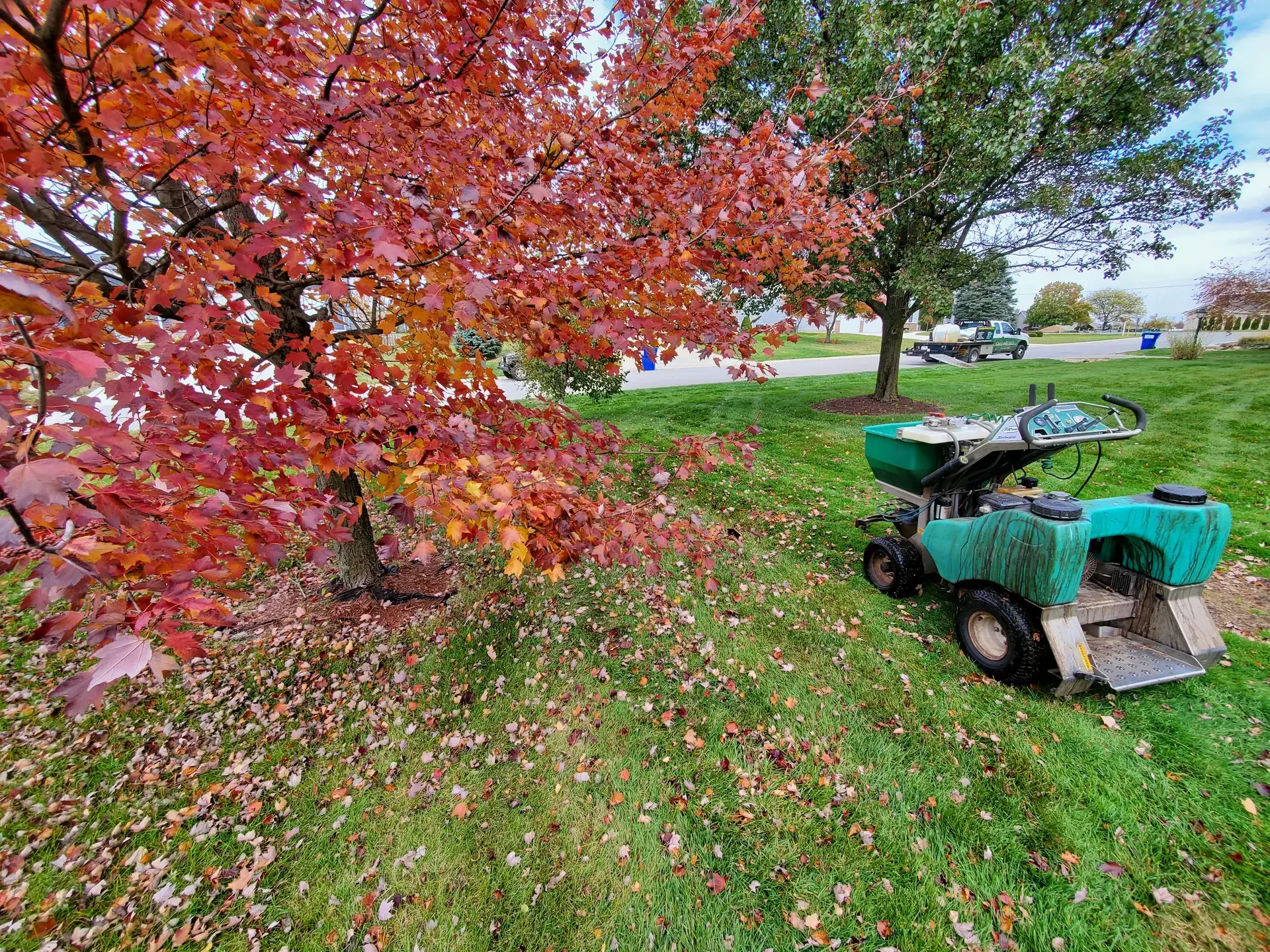
Preventative Grub Control goes down in late spring, before eggs hatch. One well-timed application takes out the young grubs while they're small and easy to reach, so the August damage never shows up. It's built into our Advanced and Preferred programs, and it's the version we recommend on any property grubs have hit before.
Telling it apart
Grubs, drought, or disease
All three turn a lawn brown in August. None of them get treated the same way, so the diagnosis has to come first.
- Grubs: turf lifts free with no roots underneath, patches are irregular and spreading, and animals are digging at night.
- Drought: the lawn stays anchored, footprints keep their shape in the grass, and color comes back within days of a real rain or a stretch of irrigation.
- Disease: patches have defined shapes or rings, the blades show spots or lesions, and it usually follows a stretch of humid nights. That is a fungicide conversation.
We dig before we treat. Cutting out a square foot of turf and counting what is in the top two inches settles it in a few minutes, and it keeps us from selling you a grub treatment for a fungus.
Service area
Where we do this
We treat lawns in these twelve towns and the country roads between them.
Questions
Grub control questions
How do I tell grubs from drought stress?
Pull on the brown grass. If it comes up like loose carpet with no roots underneath, that is grubs, and you will find the white C-shaped larvae in the top two inches of soil. Drought-stressed grass stays anchored and greens back up after a soaking rain.
How many grubs actually damage a lawn?
Around ten or more per square foot is where damage starts to show on most cool-season lawns. A deep-rooted healthy lawn can carry a few more before it browns out. A thin or compacted one shows damage sooner. Turning up one or two while you dig is nothing to worry about.
When should I put grub control down?
Late spring or early summer, before the eggs hatch. That timing is the whole point. Wait until you see damage in September and you are going after big, deep grubs that are harder to kill, and by then the damage is already done.
Is grub control part of my program?
Preventative grub control comes with the Advanced Program and the Preferred Program. Standard does not include it. If you are on Standard and have a history of grubs, we can add the treatment or bump you up a level.
Why are skunks and raccoons digging up my lawn?
They are after the grubs. Animals rolling turf back at night is one of the clearest signs there is a population under there, and their digging usually beats up the lawn worse than the feeding did. Take the grubs out and the reason to visit goes with them.
Will the lawn come back on its own after grubs?
Patches with any roots left will fill in. Areas that peeled up clean have no living plant left and need seed. Grub damage is one of the most common reasons we overseed in fall, right after aeration opens the soil back up.
Stop grubs before they cost you the lawn
Preventative timing runs late spring into early summer. Get on the schedule and it happens with the rest of your program.