
Lawn care
Overseeding
Thin turf is an open invitation. Fresh seed fills the gaps with grass so weeds have nowhere left to start, and it puts newer, tougher varieties into a lawn that has been running on twenty-year-old genetics.
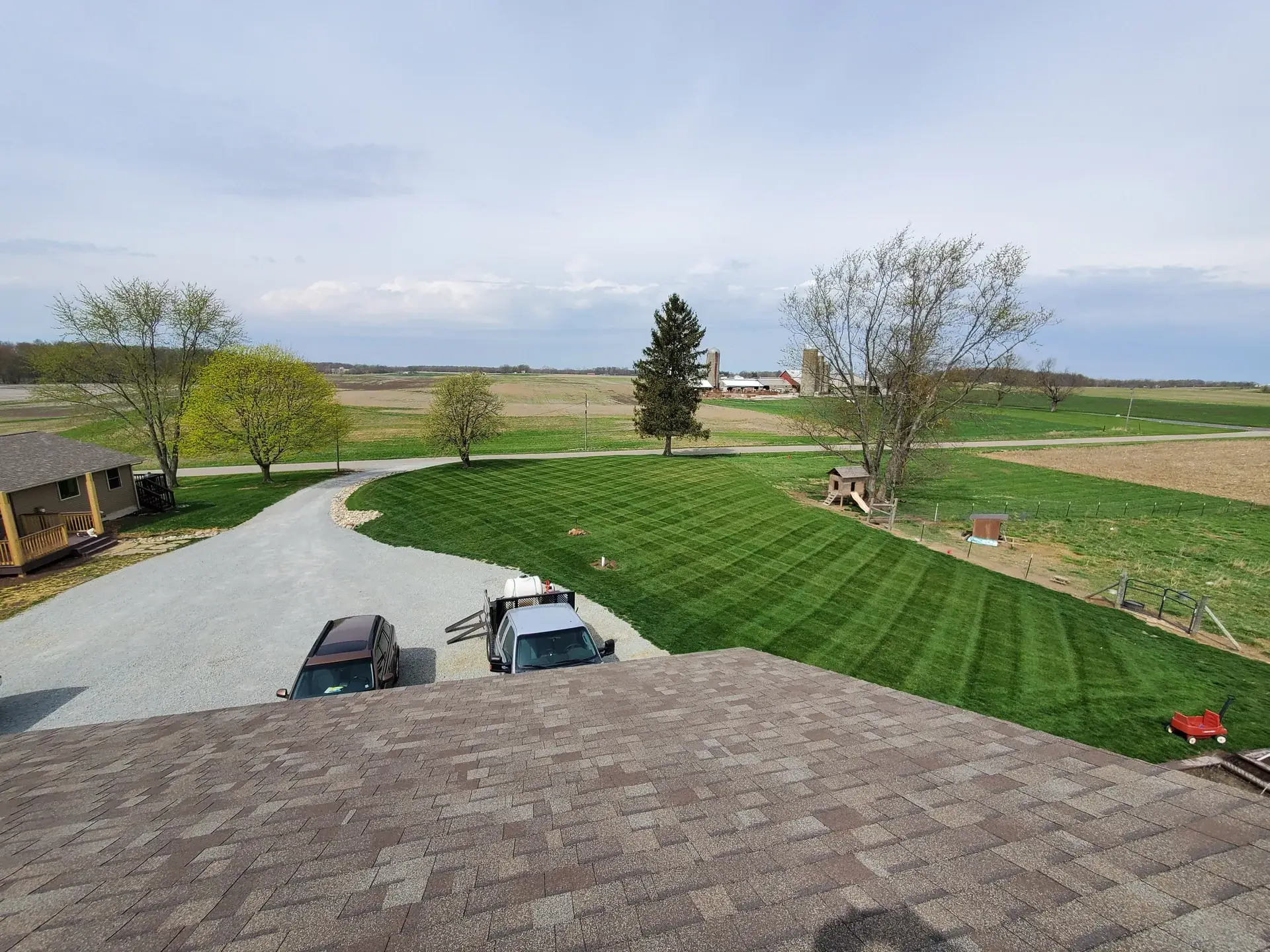
Overseeding spreads fresh grass seed across an existing lawn to thicken thin areas and fill bare spots. We overseed across Kosciusko, Whitley, southwest Allen and Huntington counties in late summer and fall, usually paired with core aeration.
Every lawn loses plants. Heat, drought, disease, insects, shade, and foot traffic thin the stand a little more each year. A bluegrass lawn planted twenty years ago is running on varieties that have been improved on several times since. Overseeding replaces what was lost and quietly upgrades what is still there.
Two things decide whether it works: seed-to-soil contact, and water for the first three weeks. Seed lying on top of thatch or hard ground dries out and dies. Seed pressed into open soil and kept damp comes up. Most failed seedings fail on one of those two points, not on the seed itself.
The cause matters
Why your lawn went thin in the first place
Seeding into a problem you haven't fixed just buys you a thin lawn again next year. So we look for the cause before we put seed down.
-
Summer heat and drought
Cool-season grass shuts down above roughly 85 degrees. A dry August with no irrigation kills off the weakest plants, and the stand comes back thinner every year it happens.
-
Shade under mature trees
Maples and oaks take the light and the water. Bluegrass won't hold under heavy shade, and the bare ground that follows is where moss and violets move in.
-
Traffic and pets
Kids, dogs, and the path everyone walks to the shed compact the soil and wear the crowns off the plants. Those lanes go bare first and stay bare.
-
Damage that already happened
Grub feeding, summer disease, and salt along the drive all leave dead patches. Killing the cause stops the damage, but nothing grows back into that space without seed.
Seed selection
What actually grows in a northern Indiana lawn
This is cool-season country. The grasses that hold up here are Kentucky bluegrass, turf-type tall fescue, perennial ryegrass, and fine fescue, and each one is good at something different.
Bluegrass spreads by rhizomes, which means it repairs itself into small bare areas, and it gives a lawn that dense dark look. It also wants sun and water. Turf-type tall fescue roots deeper and holds color further into a dry August, which makes it the workhorse for sunny, unirrigated yards. Perennial ryegrass germinates fastest and covers ground while the slower seed catches up. Fine fescue is the one that will tolerate real shade under mature trees.
Most lawns get a blend, weighted toward whatever the property actually is. A shady side yard and a full-sun front lawn are not the same seeding job. Treating them as one is why the shade never fills in.
Timing and aftercare
Fall Overseeding, seed, water three weeks, leave it alone
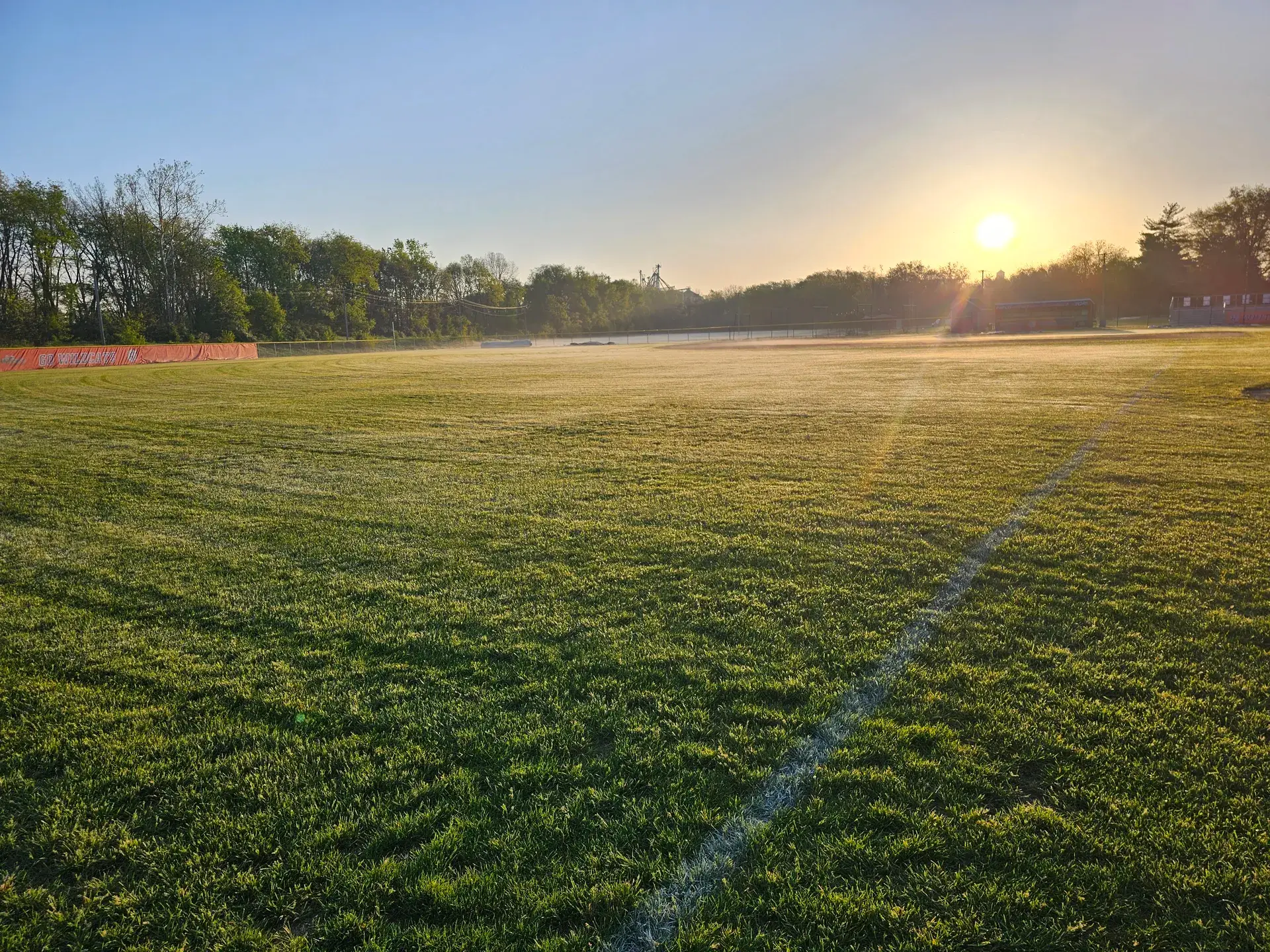
We seed from mid August through late September. Soil is still warm, so germination is fast, nights are cooling off, and crabgrass and most summer weeds have stopped competing for the space. New grass seeded in that window has September and October to root before it goes dormant.
Spring seeding is only the fallback. Seed put down in April goes into its first summer with a root system a few weeks old, and it can't be protected with crabgrass pre-emergent, because that same barrier stops grass seed too.
Your part after we seed
Water lightly and often for the first two to three weeks, enough to keep the top inch damp, not enough to puddle. Stay off the seeded areas. Once the new grass has been mowed twice, switch to deeper, less frequent watering and mow at three inches or higher.
Expect the lawn to look uneven for a month. Ryegrass comes up first, fescue follows, bluegrass finishes last, and the areas that were thinnest fill in the slowest. By the following spring the seeded lawn is one stand again.
Starting over
Lawn reseeding
Lawn reseeding is the answer when the yard is more bare ground than turf. We prep the surface, put down the right cool-season blend for northern Indiana, and set honest expectations on watering for the first three weeks. Slower than sod, but it comes in without seams and roots into your soil.
How we do it
How we handle a seeding job
- We walk the property and note the sun, shade, drainage, and traffic before we choose a blend.
- We pair seeding with core aeration on compacted lawns so seed lands in open holes instead of on hard ground.
- We coordinate the timing with your fertilization program so pre-emergent never lands on new seed.
- We tell you when seeding won't work yet, whether that's a thatch layer, unresolved weed pressure, or a shade area no grass will hold.
Service area
Where we do this
We treat lawns in these twelve towns and the country roads between them.
Questions
Overseeding questions
When is the best time to overseed a lawn in Indiana?
Mid August through late September. Soil is still warm enough for fast germination, nights are cooling, and weed competition has dropped off. Seeding in that window gives new grass two months to root before winter, which spring seeding never gets.
How long does grass seed take to come up?
It depends on the seed. Perennial ryegrass shows in about five to seven days, turf-type tall fescue in seven to fourteen, and Kentucky bluegrass in fourteen to twenty-one. A blend comes up in waves, so do not panic when the first flush looks patchy.
How much do I need to water new seed?
Keep the top inch of soil damp. That usually means a short watering once or twice a day for the first two to three weeks. Don't soak it. Once the seedlings are up and mowed twice, switch to a deeper, less frequent schedule.
Can I overseed and still get crabgrass prevention?
Not in the same spot at the same time. Pre-emergent stops grass seed from germinating too. We schedule around it, seeding in fall and putting the pre-emergent barrier down the following spring once the new turf is established.
Do I need to aerate before overseeding?
It's the difference between seed that grows and seed that blows away. Aeration holes give seed direct contact with soil and a protected pocket to hold moisture. On a compacted lawn we almost always recommend doing the two together.
Will overseeding fix a lawn that is mostly weeds?
Not by itself. Seed dropped into a weed-dominated lawn is new grass competing with established weeds, and the weeds usually win. Those lawns need the weeds controlled first, then seed. We'll tell you which order yours needs.
Fill in the thin spots this fall
The seeding window is short. Send us your address and we'll look at the lawn and tell you what it needs.