
Kosciusko County, Indiana
Lawn care and pest control in Milford
We treat lawns across Milford out of our Pierceton shop. Under most of town, Ormas loamy sand runs through the yards, thirsty and fast-draining over the same aquifer the town's own water utility draws on, so the program stays light, frequent, and honest about what the ground will actually hold.
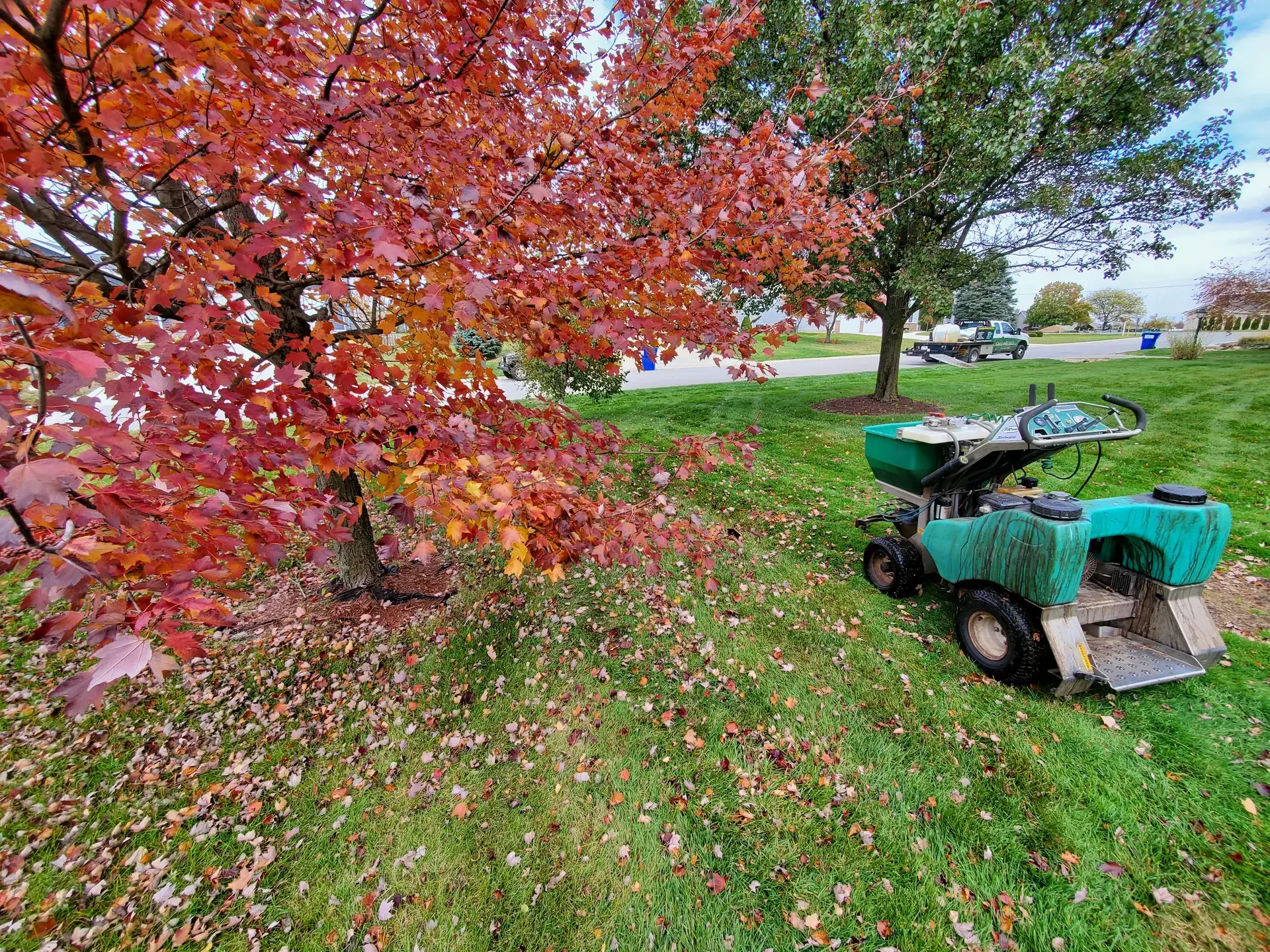
The thirstiest ground on our route
About a third of Milford is a single soil map unit. Ormas loamy sand, on nearly flat ground, covers roughly 33 percent of the town, and it is the driest surface on our route. Available water capacity is 0.11 inches of water per inch of soil, dropping to 0.07 at about two feet down and 0.04 at four. Water moves through the surface at 91.74 micrometres per second, the fastest of any soil we work on. Surface organic matter is 1.25 percent, the lowest. Sand runs 81 percent at the surface and 91 percent at depth.
That is Warsaw's droughty story concentrated. Warsaw has similar sand in a scatter, spread through pockets of Coloma, Boyer and Metea. Milford has one soil, running under a third of the town, at the extreme end of the scale.
Then, on the same street, there is the wet side. Sebewa, Palms muck, Gravelton, Brady and Homer together cover another quarter to a third of the ground in town, and they run poorly to very poorly drained. Palms muck is 65 percent organic matter and never really drains. Gravelton floods. A droughty front yard and a saturated back corner on one Milford lot is not unusual, it is the pattern.
What follows for the work is clear. On the sand, a single heavy spring feeding is money in the groundwater. The nitrogen is gone before the grass takes it up, and it is going straight down into the same outwash the town's own water utility pulls from. Lighter, more frequent rounds put the feed in front of the roots when they can actually use it. Irrigation matters more here than most homeowners expect, and a skipped week in July is not a stress event, it is a collapse.
On the muck and the wet corners, water and feed are not the problem, air is. Aeration and time are what those spots want, not more of the program running on the rest of the yard.
- County
- Kosciusko County
- ZIP codes
- 46542
- From the shop
- North of the shop, up State Road 15 past Leesburg.
- Ground
- The thirstiest ground on our route. A third of the town is one loamy sand that holds almost no water and moves it faster than anything else we work.
- Drainage
- Water is gone almost as soon as it lands on the sand. Then a quarter of the town is poorly drained low ground and muck doing the exact opposite.
- Housing
- Median home built around 1961, about a third of it predating 1939 and nothing new since 2020. A mid-century, owner-occupied town.
What Milford properties need
What we run on Milford properties
Thirsty sand through the middle of town and muck in the low corners. These are the treatments that come up most often on both.
-
Fertilization & Weed Control
On Ormas loamy sand, with 0.11 water capacity and water moving at 91 micrometres per second, a heavy spring feeding leaches out before the grass can use it. Lighter, more frequent rounds keep nitrogen in front of the roots. Phosphorus-free by default, and pre-emergent goes down timed to soil temperature, not the calendar.
See how it works -
Core Aeration
The wet-footed side of Milford, Sebewa loam, Palms muck and the poorly drained corners, needs air more than it needs anything else. Pulling cores lets roots push past the top inch and lets excess water find its way down instead of standing at the surface. The sandy side benefits from the same pass, for different reasons.
See how it works -
Overseeding
A thicker canopy is one of the few things that holds water on Ormas. Denser turf shades the surface, slows drying, and keeps more of the summer rain where roots can use it. Seed goes into open cores in fall, when the September soil roots faster than a spring seeding ever will.
See how it works -
Grub Control
Sandy loams are exactly the ground white grubs prefer, and on soil that dries this fast, a chewed root system means the sod peels back like carpet. A preventative application in early summer stops them cheap. Repair on this ground, in September, costs a lot more than prevention did.
See how it works -
Mosquito Control
Palms muck, Gravelton and the poorly drained back corners on a lot of Milford properties hold water most of the summer. That is a lot of standing water in a small town. A public route pass down the street will not reach the shaded harborage inside a fenced yard or under a deck. That's where we treat.
See how it works -
Perimeter Pest Control
Milford's median home was built in 1961, and more than a third of the housing predates 1939. Those foundations have settled. Ants, spiders and boxelder bugs cross at the sill and around vents. A treated band outside cuts that traffic and keeps the season quieter inside without pretending to seal the building.
See how it works
Small town, big grounds to keep
Milford is a town of about sixteen hundred people that runs on grounds bigger than the town itself. CTB, Inc., a Berkshire Hathaway subsidiary, is headquartered here. So is Maple Leaf Farms, founded in 1958 and the largest producer of White Peking ducks in North America. So is The Papers Incorporated, founded in 1939 and the publisher behind the region's weekly and monthly papers. We make no claim about work for any of them. What we can say is that a town this size with grounds this visible is a different kind of place for a lawn company to work.
The turf around a working headquarters or a distribution site does a specific job. It is the first thing anyone pulling in reads about the operation. Thin, weed-run grass at the entrance says something about the property that no signage can undo. A dead patch at the flagpole is the picture that ends up on somebody's phone. And the ground it is growing on is the same Ormas loamy sand and Palms muck the neighborhoods sit on, so the same split, sandy in the middle and saturated at the corner, shows up on a commercial lot the way it shows up on a front yard.
That is the reason a single blanket program almost never fits a commercial property. Entrances, medians, retention areas, the parking-lot strips that most crews skip, all sit on different ground. Some of it needs a lighter feed and more water. Some of it needs air more than it needs anything else.
Milford lawn questions we get
Why does my Milford yard need more watering than my brother's in Pierceton?
Different soil. Roughly a third of Milford is Ormas loamy sand, which holds only about 0.11 inches of water per inch of soil at the surface and drains at 91 micrometres per second. Pierceton sits on heavier moraine till that holds water and stalls it at the surface. Two towns, opposite prescriptions on the same route.
Do you use phosphorus on Milford lawns?
Not by default. Milford's soil drains fast, and the town runs its own water utility on the same outwash the ground sits on. Indiana restricts phosphorus on established lawns anyway, and we run phosphorus-free unless a soil test says the ground is actually short. Any granular that scatters off the turf gets swept back before we leave.
Waubee Lake is nearby. Does that shape the program?
Waubee Lake sits in the same township as Milford and is one of the sixteen lakes the Lilly Center at Grace College samples every summer. The county-wide 2025 average across those sixteen was 0.03 milligrams per liter of total phosphorus, about three times the EPA guideline. Running phosphorus-free is part of working with that rather than against it.
My back corner stays wet all summer. What do I do with it?
It probably isn't the same soil as the rest of the yard. Palms muck and Gravelton show up in low corners across Milford, and they never fully drain. That patch does not need more water or more feed. It needs air. Aeration and time do more there than anything else on the program.
When should crabgrass pre-emergent go down?
Timed to soil temperature, not the calendar. The date shifts every year with the weather. On Milford's sandy ground it usually goes down a little earlier than the heavier moraine soils east toward Pierceton, but we watch the ground rather than the calendar.
Do you mow lawns in Milford?
No. GreenWorks is a lawn-health and exterior pest-control company. We feed the soil, control weeds and insects, aerate and overseed, and treat the outside of the house. Someone else cuts the grass. If you need that someone, ask and we'll point you to a company we trust.
Reviews
What Milford neighbors say
“Good people to work with. Very informative and professional.”
“After purchasing a newly built home, the team came to do yard prep then seeding and our grass is much better than we could have done on our own! They come out to treat the yard on a regular schedule so I don't have to think about it and that is very nice with a packed schedule. Thank you for all you do!”
Nearby
Nearby towns we also treat
Syracuse, Leesburg and North Webster are all on the northern end of the route, and most weeks we are in one of them.
Ask us about your Milford lawn
Send the address and what's bothering you about the yard. We'll walk the property, tell you whether it's the sand, the muck or something else, and put a program and a price in front of you.