
Lawn care
Lawn disease diagnosis and fungicide programs
Turf disease is the problem where a bad guess costs the most. We identify what is actually on your lawn first, then build the treatment around that disease and nothing else.
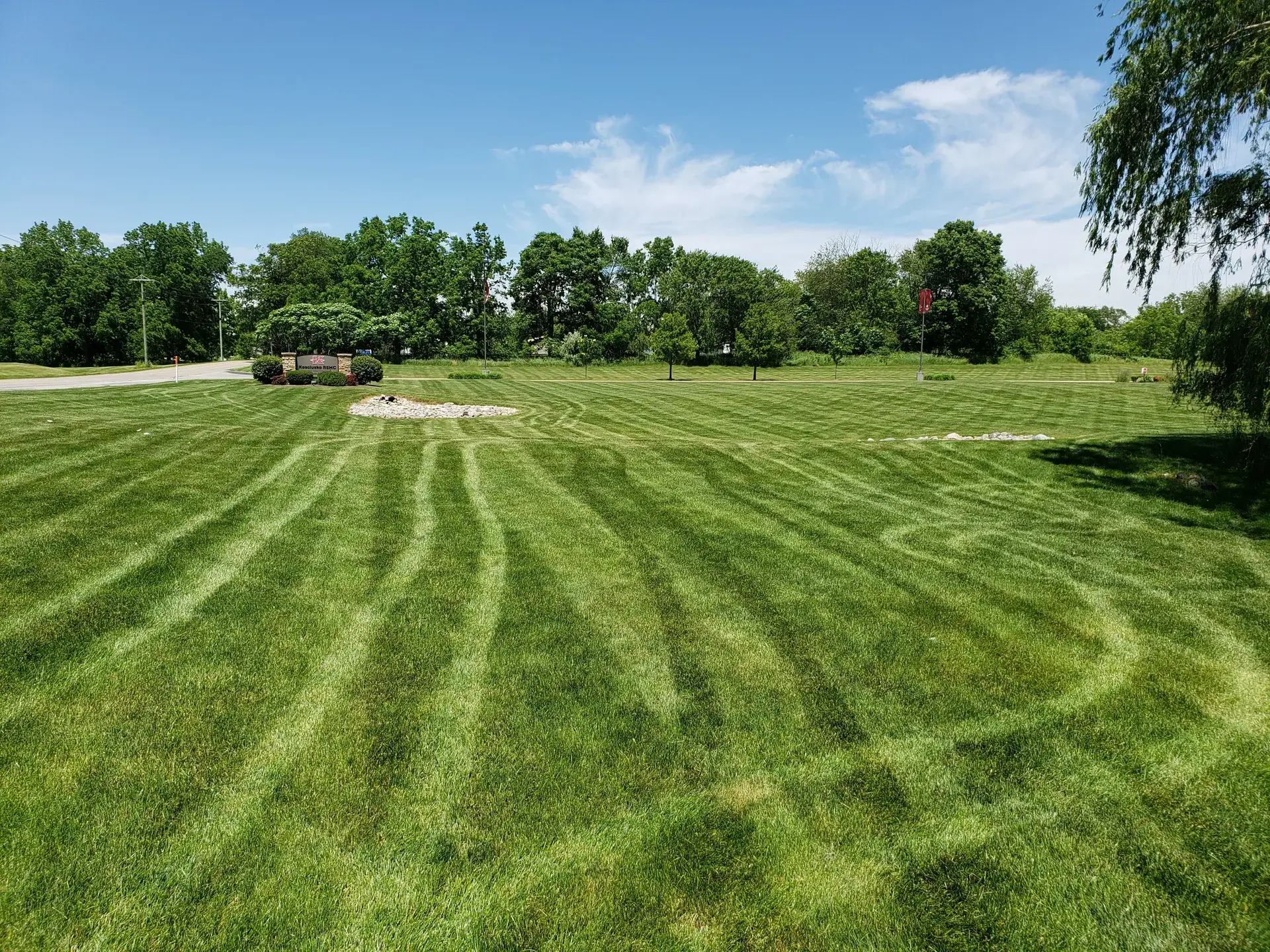
We diagnose the disease on site, then build a fungicide program around what we found. Cool-season lawns across Kosciusko, Whitley, southwest Allen and Huntington counties see a handful of predictable fungal problems, each one with its own season and answer.
Fungus lives in the soil year-round. What changes is whether the conditions let it take over. A run of humid nights, a lawn watered at dusk, thatch holding moisture at the crown, compacted ground stressing the roots. Disease is what those conditions look like once they line up, so a spray on its own rarely ends it.
So we start by naming what we are looking at. Dollar spot and brown patch get treated differently. Red thread on an under-fed lawn is really a fertility problem dressed up as a fungus. Summer patch attacks the roots, and you fight it with aeration and water management as much as with a bottle.
What we find here
Lawn disease treatment for northern Indiana turf
Six of them cover almost every call we get on a cool-season lawn.
-
June through September
Dollar spot
Bleached spots ranging from the size of a silver dollar up to a dinner plate, sometimes running together into bigger patches. Individual blades carry tan lesions with a darker border. It hits hardest on lawns short on nitrogen and in heavy morning dew.
-
July and August
Brown patch
Circular tan patches a foot to several feet across, on tall fescue and ryegrass. It needs hot days, nights that stay above the upper sixties, and high humidity. Warsaw and the lakes area serve that up most Augusts.
-
Spring and fall
Red thread
Pink to red threads on the tips of the blades and ragged patches of bleached grass. Cool, wet stretches on under-fed lawns bring it out, and it rarely kills the plant. Fertility fixes it faster than a fungicide will.
-
July into September
Summer patch and necrotic ring spot
Rings and arcs of dead bluegrass, often with a tuft of live grass sitting in the middle. Both are root and crown diseases driven by heat, compaction, and stress. Aeration ends up mattering as much as any spray you could put down.
-
Spring and early summer
Leaf spot and melting out
Dark lesions on the blades that thin the lawn from the top, then work down into the crowns and take whole areas with them. Older bluegrass stands and lawns mowed too short are the usual victims.
-
At snow melt
Snow mold
Matted gray or pink patches that turn up as the snow pulls back in March. Most lawns grow out of it once the ground dries and warms up. If a lawn gets it badly every year, a late-fall preventive treatment is worth a look.
Diagnosis first
What we look at before anything gets sprayed
We look at individual blades for lesions, spots, or thread, since the leaf carries the clearest evidence. We look at the shape of the damage, because rings and arcs point one way and scattered spots point another. We check the soil, the thatch layer, and how wet the crown zone is under all of it.
Then we ask about the lawn. What time your irrigation runs. How short it gets mowed. When it was last fed, and with how much nitrogen. Whether that same corner does this every August. Those answers narrow it down faster than anything else on the property.
Sometimes the answer is a fungicide program. Sometimes it is moving the sprinkler timer to 5am, raising the mower an inch, and waiting. We tell you which one you are dealing with before anything gets sprayed on the lawn.
The program
Fungicide Treatment, preventive, curative, and the things that cost nothing
A preventive program is for lawns with a history. If the same property loses turf to brown patch every August, we set applications on an interval through that window, ahead of the weather rather than behind it. Preventive timing protects the plant before infection, and that is the only way to keep the lawn from thinning at all.
A curative treatment is what we run when a lawn is actively falling apart and you called us this week. It stops the spread. It does not put back what died at the crown, so those spots still need seed later in the fall.
The changes that reduce pressure for free
- Water deep in the early morning, not in the evening. Wet blades sitting through the night are what most of these diseases are waiting for.
- Mow at three to three and a half inches with a sharp blade. A dull blade leaves ragged cuts across the whole lawn, and every one of those is an open wound.
- Keep nitrogen steady instead of heavy in midsummer. Lush July growth feeds brown patch, and starved turf invites dollar spot.
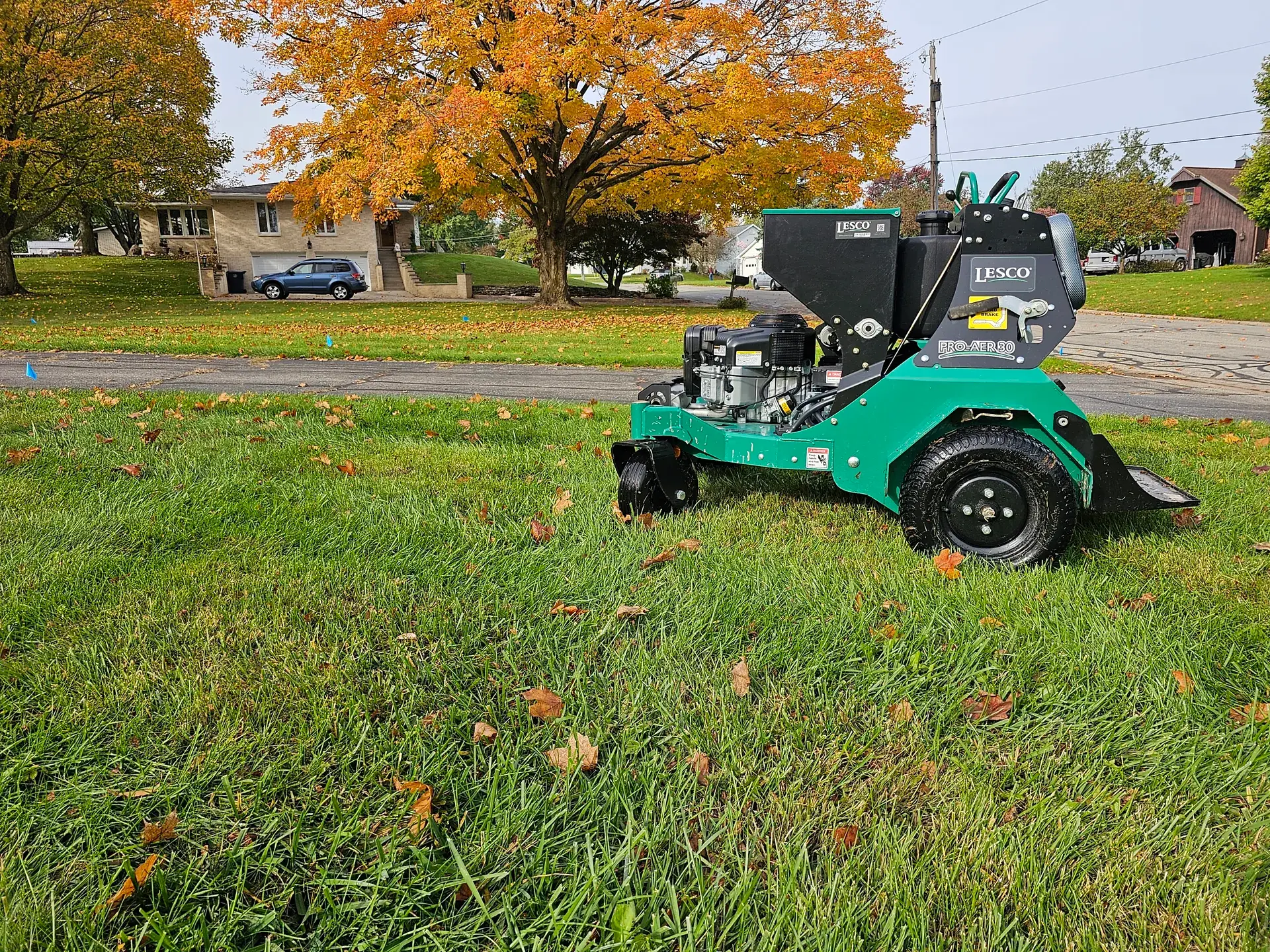
- Open compacted soil with core aeration. Pull down a heavy thatch layer with dethatching if there is one.
Steady nutrition is part of this too. A fertilization program built on season-long release does more for disease resistance than any rescue spray on the shelf. A well-fed, deep-rooted lawn gets sick less often and comes back faster when it does.
Service area
Where we do this
We treat lawns in these twelve towns and the country roads between them.
Questions
Lawn disease questions
How do I know if it's a lawn disease or something else?
Look at individual blades and at the shape of the damage. Disease usually leaves lesions or spots on the leaf and makes defined patches, rings, or arcs. Grubs lift like carpet with no roots underneath. Drought stays anchored and greens back up with water.
Do I actually need a fungicide, or will it grow out on its own?
Plenty of outbreaks around here are cosmetic and pass once the weather shifts. Red thread especially. Diseases that go after roots and crowns, like summer patch, do lasting damage and are worth treating. We tell you which one you have before recommending anything.
Why does the same spot in my lawn get sick every year?
Something about that spot is different. It stays wet. It has no airflow. It is compacted, or shaded, or holds dew until noon. Disease tracks those conditions. Changing the conditions does more good than repeating a spray every season.
When should I water to keep disease pressure down?
Early morning, between roughly 4am and 9am. That gives the lawn all day to dry out. Evening watering leaves the blades wet all night, which is the exact condition brown patch and dollar spot need to spread.
How often do fungicide applications go on?
Preventive applications run on an interval through the high-pressure window, usually every two to four weeks depending on the product and the weather. A curative treatment for an active outbreak is often one or two applications while conditions stay favorable for the disease.
Will the dead areas fill back in on their own?
Leaf diseases thin the lawn and it usually recovers once the outbreak stops. Root and crown diseases kill the plant, so those areas stay bare until they get seeded. Fall aeration and overseeding is the standard repair for that damage.
Find out what is actually killing your turf
We diagnose on site, tell you what we found, and only recommend a fungicide program when the disease actually calls for one.